2nd September 2026: Trip to St Michael’s Church, Duntisbourne Rous
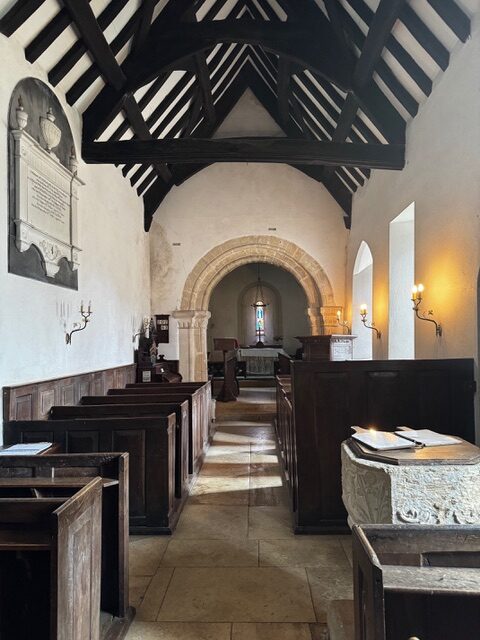
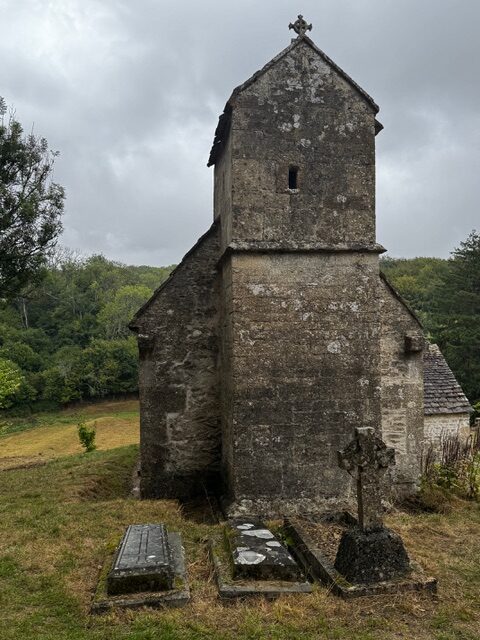
This tiny church is built on a steep slope and is Grade 1 listed. It appears to have an Anglo-Saxon base, with later Norman features, plus other medieval changes. The chancel was added by the Normans in the 12th century, plus a tiny crypt below it. The village of some 60 inhabitants, owes its name to Sir Roger Le Rous (the Red), who owned the manor until his death in 1294.
The church is found in an idyllic setting above a tranquil river valley and is well worth a visit.
19th August 2026: Trip to Sisters Neolithic Long Barrow
Participants: Steve F, Jane, Mike CL, Richard M, Ericka, Lesley, Pauline, Ruth, George, Judi, Mickael G, Val L, Lu, Neil, Madelaine, David, Carole, Richard B, Celia, Steve McH
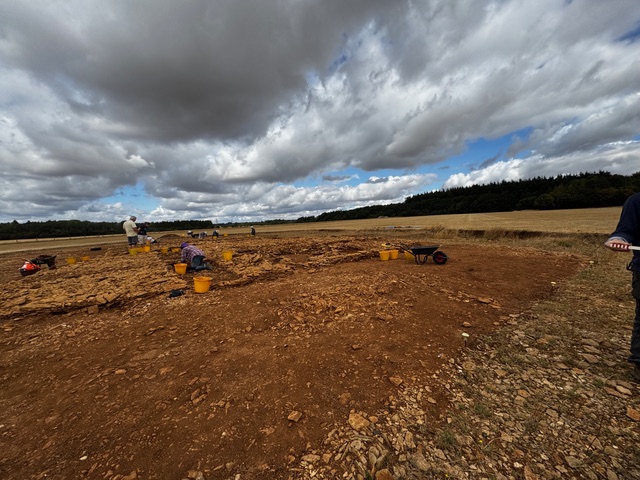
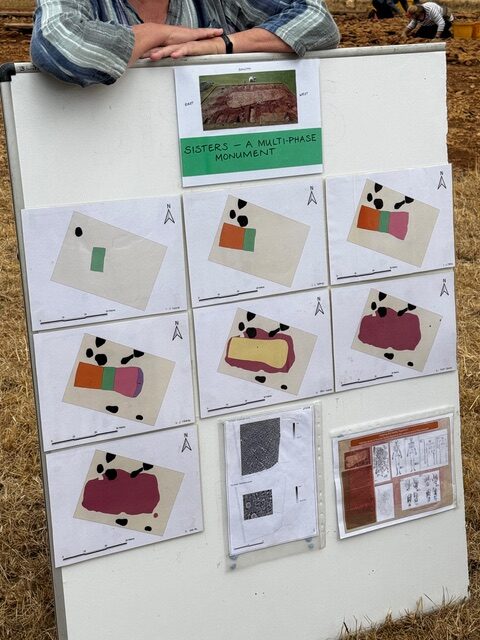
We saw the culmination of a 12-year project to excavate the Sisters long barrow, near Cirencester. This was started by Prof. Tim Darville, a noted expert on the archaeology of the Cotswolds, who sadly died two years ago. We were taken round the site by Luke Jenkins, who is running the dig. A simple burial chamber was started in c. 3,600 BC. It was used and altered over the next 1,000 years. In 2,800 BC a box was built on to the end and they contained the bones of 4 individuals. DNA indicated they were not related and that they dated back a thousand years. There were Bronze Age round barrows in the same field indicating this was an important site for many generations of local people.
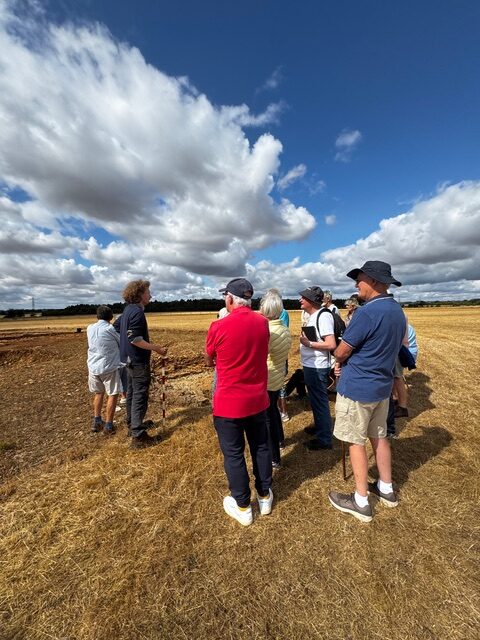
July 2026: Trip to Roman Villa
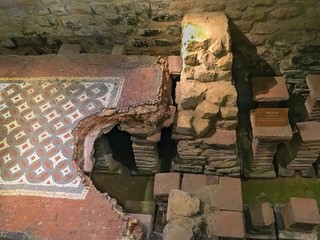
We last visited this site two years ago. It had featured in a Time Team dig in search of a Roman building which had been excavated in 1810. The actual site was in dispute, hence the Time Team interest in it. The latest dig started in 2022 and has continued every summer since. Last year saw a breakthrough indicating that this was the site of a rich Roman villa, with mosaic floors and a lavish bath house. It is a complex site with possibly ten building phases. It is interesting in that very few artefacts, such as pottery sherds have been found there. A fascinating site.
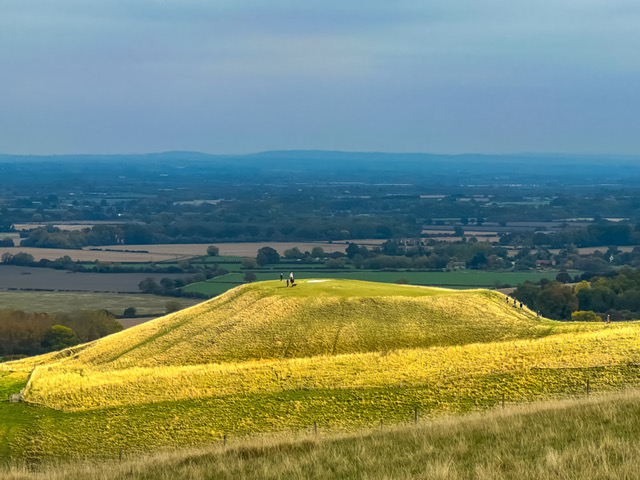
3rd June 2026: Trip to the White Horse, Uffington
The White Horse at Uffington is 110 m long and is by for the oldest figure cut in chalk, having been constructed at the end of the Bronze Age/start of the Iron Age. Just above it is an Iron Age hill fort, which is below the Ridgeway, a prehistoric trackway. Below at the base of the hill is Dragon Hill, a natural feature but with the top artificially levelled off. This site is associated with St George, who, according to legend, slew the dragon there.
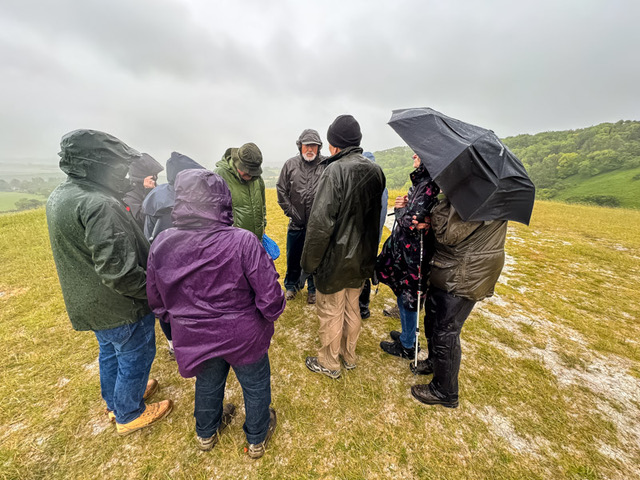
Our trip coincided atrocious weather conditions, so the normally wonderful views were obscured by rain, wind and mist!
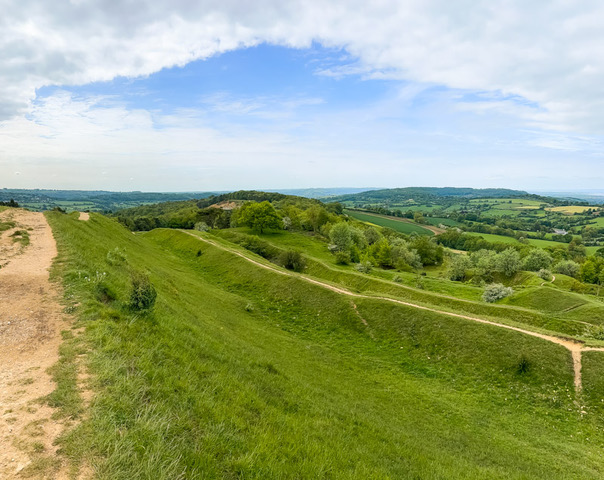
Trip to Painswick Beacon and Painswick village
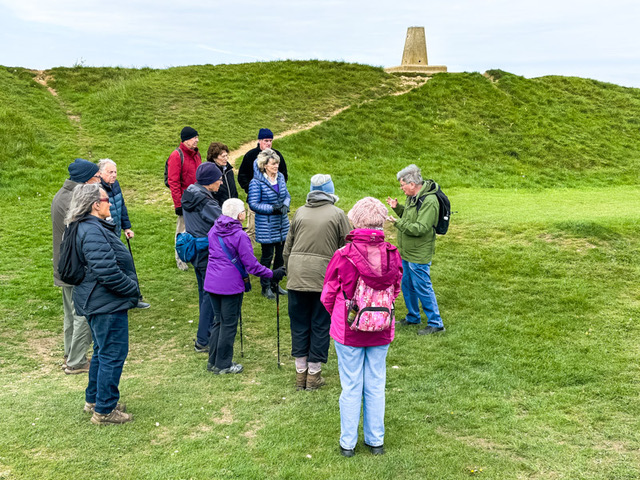
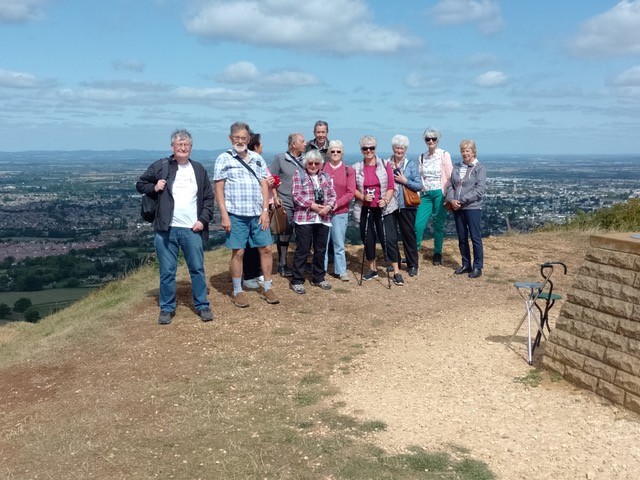
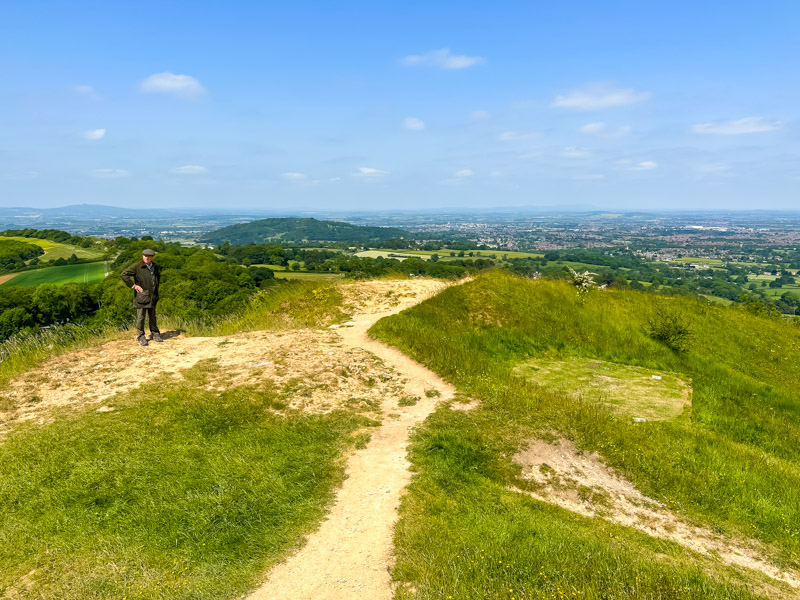
Poised on the Cotswolds scarp, Painswick Beacon is the site of an Iron Age hill fort. It was constructed in the middle to late Iron Age, is triangular in shape and is multi-vallate, covering some 7 acres. While extensive quarrying and an 1891-built golf course have impinged on it, the hill fort is still an impressive site, with spectacular views.
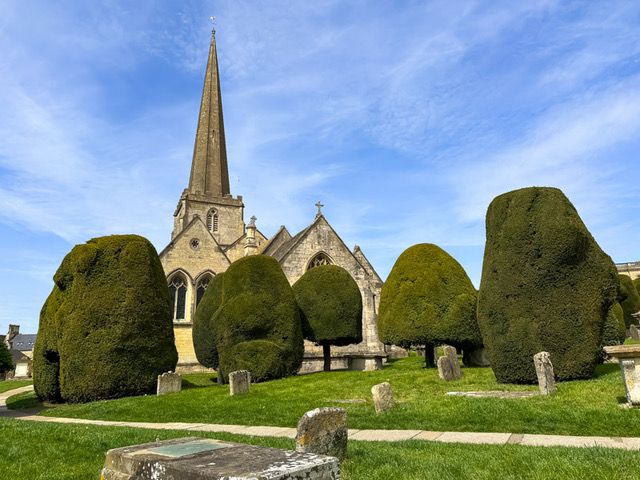
Painswick village, called the “Queen of the Cotswolds”, has a rich and varied history, dating back to Anglo-Saxon times. It became prosperous thanks to the wool trade. This included weaving on handlooms and then water-powered and steam-powered mills. When this declined, it meant the modern-day Painswick has beautiful buildings built of local stone, which have not been knocked down to be replaced with modern ones. There has probably been a church here since Anglo-Saxon times and the current one was built in the Norman era and added to over the centuries. Its outer walls still have the marks of cannon and musket balls, the result of a skirmish between Royalist and Parliamentarians during the great English Civil War.
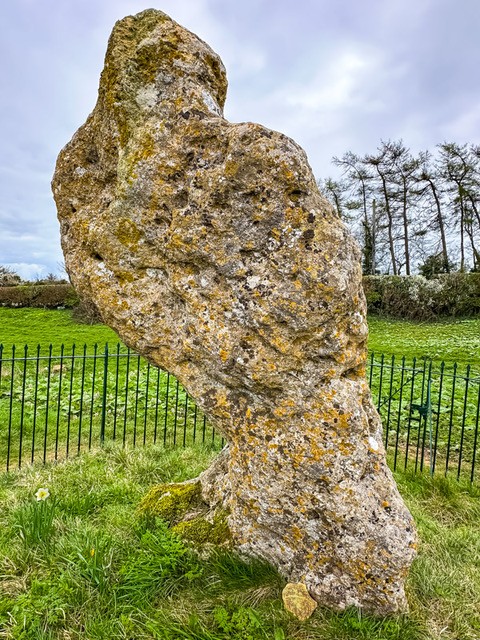
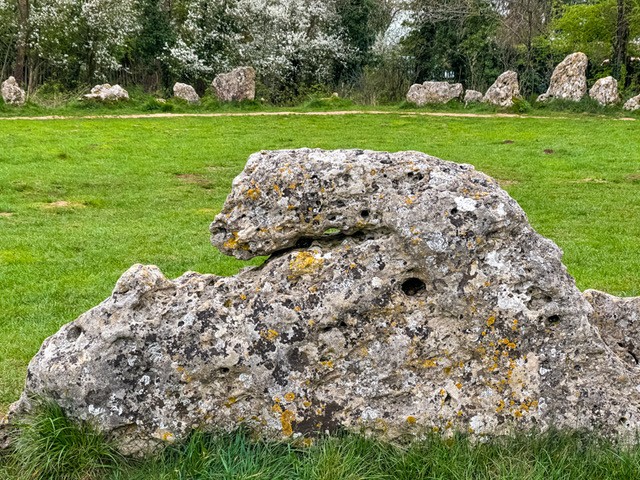
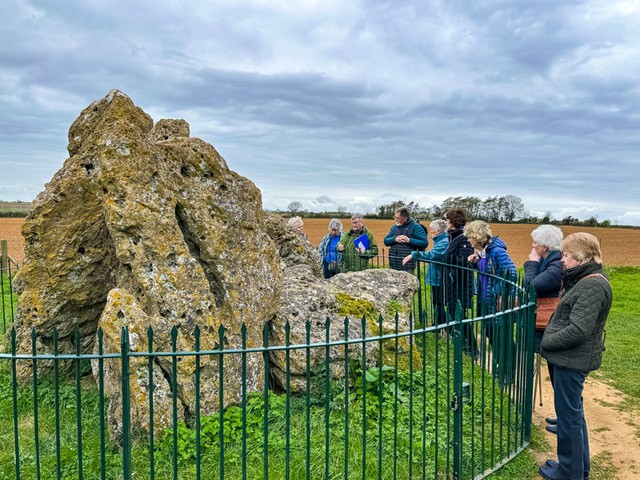
The Rollright Stones are a complex of Neolithic and Bronze Age megalithic monuments, constructed of nearby oolitic limestone. All three sites are distinct in their design and purpose and were in use from the 4th to 2nd millennium BC.
The Whispering Knights is a portal dolmen and dates to the Early of Middle Neolithic period. This is the oldest part of the site and was probably used as a burial site. The King’s Men is a stone circle dated to the late Neolithic/ Early Bronze Age. It has many similarities with stone circles, such as Long Meg and her daughters , in Cumbria. The King’s Stone is some way away from the King’s Men. This single monolith is difficult to date but may be from the Bronze Age and may mark a burial site.
Trip to Burford
We were taken round Burford in three groups by volunteers from Tolsey Museum in the High Street. We learnt about aspects of the town’s history, its high and low points and to better appreciate the varied architecture and the styles and ages of the houses. The earliest are believed to be from the late Fifteenth Century. We were able to look with new eyes on what we thought were familiar views of the High Street. In fact, there are over 200 listed buildings in Burford.
It was a thoroughly enjoyable visit and we hope to return next year.


Trip to Iron Age Roundhouse, Bourton Primary School
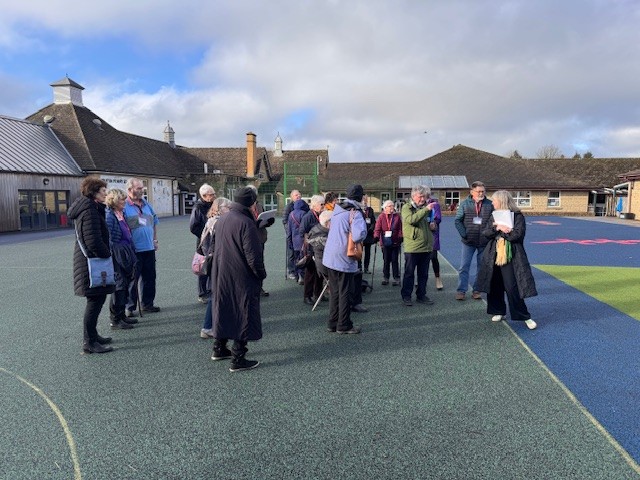
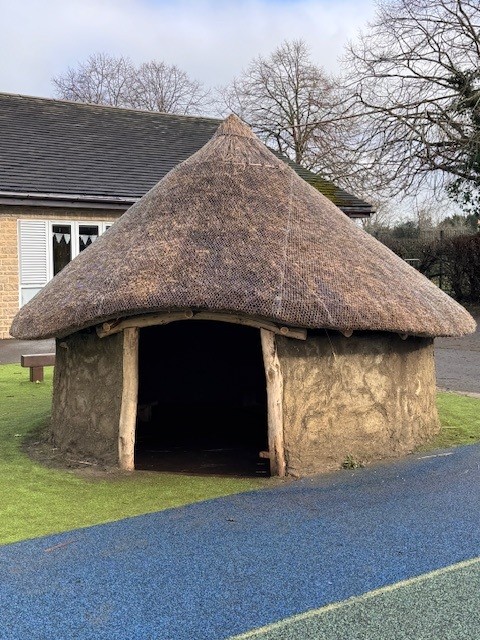
A replica Iron Age roundhouse was built to commemorate a series of archaeological digs at the Bourton Primary School in advance of the construction of new classrooms. One such dig had revealed the crouched burial of a teenage girl from the Iron Age deposited in a rubbish pit. Further digs revealed evidence of an Iron Age settlement with 230 postholes, probably for roundhouses and other structures. Part of a Romano-British cemetery was uncovered with 18 inhumation burials of adults juveniles and infants. One adult skull indicated signs of violent weapon trauma.
As the roundhouse was in a state of disrepair, money was raised to replace it and the new one was built in 2025 and is a splendid link between the school and those who lived there 2.000 years ago.
Trip to Corinium Museum Resource Centre, North Leach
The Resource Centre at North Leach houses items that are not on display at Corinium Museum and has some 50 years of finds/contributions. Phil, the Collections Assistant, showed us the archaeological side, which included some human remains. These included a skull from the Roman era subjected to trepanation, drilling holes to deal with swelling, which the patient had recovered from. Another, again from the Roman era, showed white patches on a leg bone, possibly indications that person was a plague victim.
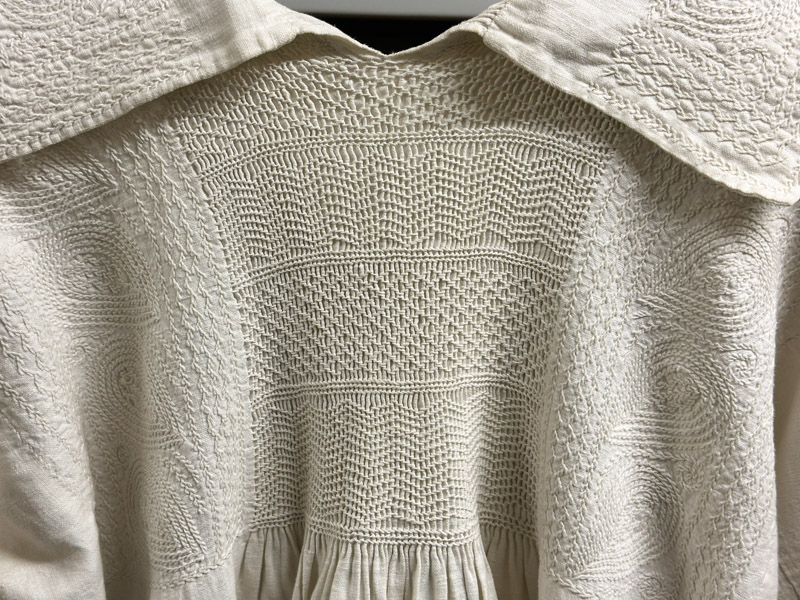
On the social side Caroline showed us an amazing collection of objects, ranging from a vicious man trap to an anti-suckling collar for calves. Clothing items stored included a Home Guard greatcoat to intricately-stitched smocks, some of which were for “best” rather than for work on the farm.


27th November 2025: Visit to Oxfordshire Museum Resource Centre, Standlake
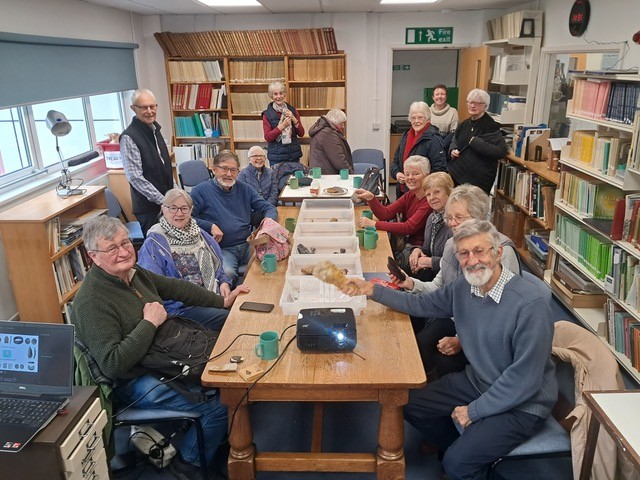
Dr Edward Caswell’s subject was an introduction to Lithics in order to understand ancient stone tools and the techniques of how they were constructed and what they were used for. This covered the earliest stone tools from the Palaeolithic (Old Stone Age), through the Mesolithic (Middle Stone Age) and Neolithic (New Stone Age), and also covering the Bronze Age, Iron Age, the Romano-British and Anglo-Saxon Periods.
We were also given a tour of the storage area, filled to the brim with items ranging from archaeological finds to cast-iron mangles.In addition, we visited the conservation room and were able to see a recently-found huge Iron Age bowl being painstakingly reconstructed. All-in-all, a fascinating day.
1st October 2025: Trip to the Devil’s Quoits and to St Michael’s Church, Stanton Harcourt
The Devil’s Quoits is the site of a large Late Neolithic stone circle. It is a sacred landscape including ring ditches and other mortuary enclosures. Much of the site eroded over the millennia and almost all of the 36 stones had disappeared by the 20th century. In WWII the site was used to build an RAF airfield. After the war, it was decided to restore the circle and stones and this was done from 2002 to 2008. Several original stones were used, plus modern ones from nearby Ducklington.
St Michael’s Church in the pretty village of Stanton Harcourt has several interesting features. The church has the oldest Early English Rood Screen in England. The shrine of St Edburg, an Anglo-Saxon saint from the 7th Century is found in the chancel and was moved here from Bicester Priory during the Dissolution of the Monasteries. On the outer wall there is an epitaph by Alexander Pope to two young lovers struck and killed by lightning in1718.

Visit to Seven Barrows
Neolithic people buried their dead in long barrows, containing numerous bodies and body parts, such as at West Kennet. In the Bronze Age, however, round barrows were built with normally one person interred, probably of high status. The site we visited actually has 38 round barrows and can be termed a sacred landscape. It is found close to the Ridgeway and the Uffington White Horse, which is now believed to have been built in the Late Bronze Age.
The site is built on chalk and it is thought that water, in particular seasonal springs, decided on the location of the barrows. This is also a mini nature reserve and some of our members were able to take photos of plants and insects there. All in all, this is an interesting site well worth a visit.


Visit to Leckhampton Iron Age hill fort
Leckhampton is one of a number of hill forts constructed along the Cotswold escarpment between 700-100 BC. This promontory fort encloses an area of about 7 acres and has one rampart and ditch. Quarrying has cut into the west and north sides. The Romans quarried here and some of the stone was likely used in constructing the defences of nearby Gloucester. Five Anglo-Saxon pennies were found here and are dated from 853-901 AD. Quarrying for stone took place from the 1600s until the 1920s.
Down below the fort is the Devil’s Chimney, a well-known local landmark. Legend has it that the actual Devil uses it to release the fires of hell! There are wonderful views from the fort and the site is well worth a visit.

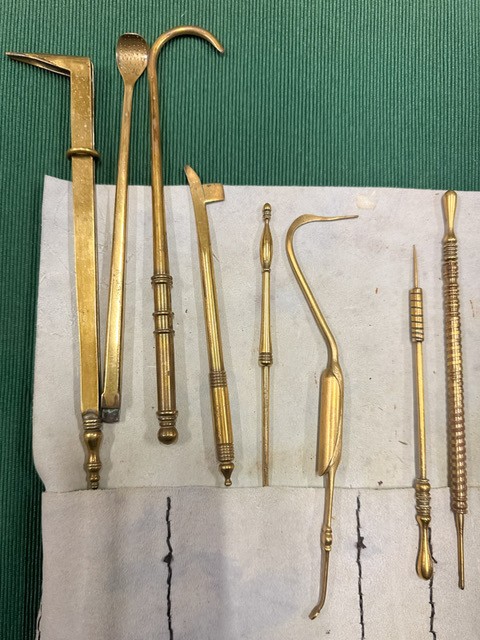
We received a presentation on Roman medical practices by “Doctor Julia”. Prior to the Roman occupation in 43 AD of Britain, the Britons would have relied on herbal medicine, needing a good knowledge of herbs and plants. The incoming Romans brought more rigour to this field. Roman army units would have dedicated medical units , with a Valetudinarium set up; a small protected area to nurse/heal the sick and wounded.
While this team did not know about the causes of infection, sepsis, etc, they had various methods of helping to alleviate these symptoms, including a wide number of medicines and their correct dosage, the use of rain water for purity and a range of specially-designed instruments.
We were all impressed by the expertise of these Roman medics and the fact that this knowledge did not last in Britain with the departure of the legions in C 410 AD.

Visit to Lord Leicester's Hospital
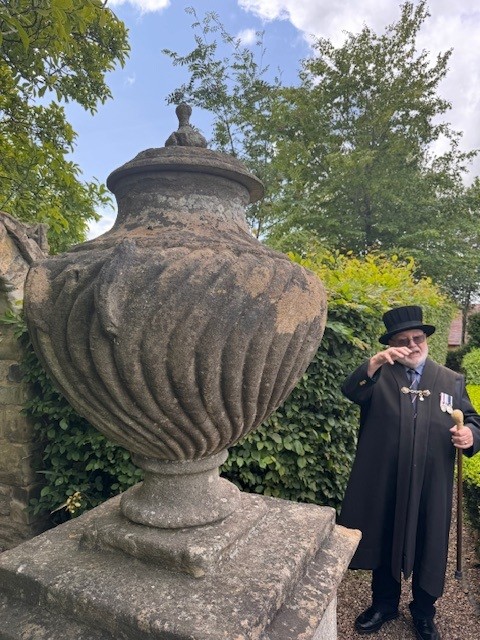
Lord Leicester’s Hospital is situated in the heart of the old part of Warwick. It originated as the Chapel of St James the Great in 1123. After several rebuildings, it was transformed into an Alms House for veterans by Robert Dudley, Earl Of Leicester, in 1571. The hospital has been a home for the Master and Brethren for over 450 years. It is maintained in pristine condition, with a magnificent garden, which seems a haven of peace in the middle of a modern, bustling town.
We were taken round by Brother Peter, ex-Navy, one of the eight Brethren currently in residence.

Visit to Badbury Rings and Great Coxwell Tithe Barn
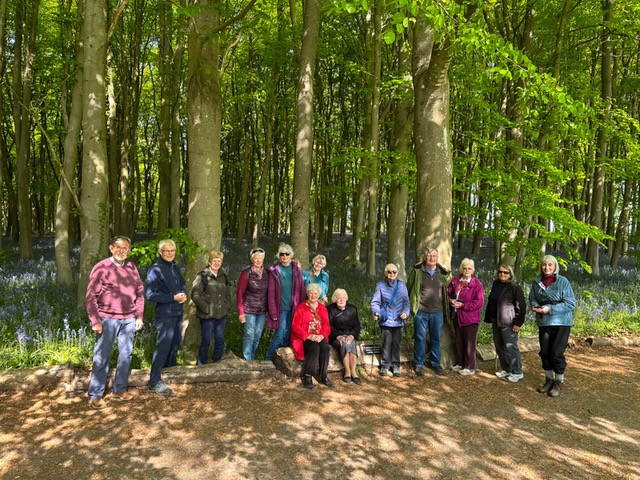
Badbury Rings is an Iron Age hill fort built c.600 BC. Unfortunately, much of the ramparts were levelled in the 1800s and beech trees planted on it. It is NT administered and this time of the year, people go there for the magnificent bluebells in the wood. There is the legend that this was the site of the battle of Mons Badonicus, where King Arthur defeated the encroaching Anglo-Saxons. In WWII it was used as a training area for a highly secret military unit prepared to wage guerrilla warfare against German forces if they invaded this country.
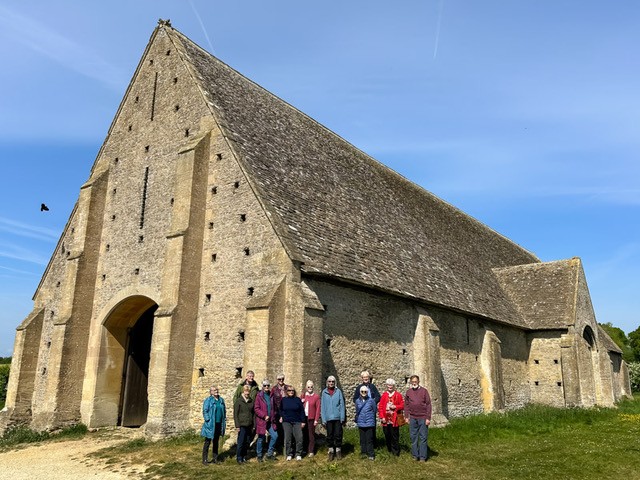
Great Coxwell tithe barn was built in the 13th century for the Cistercian monks of Beaulieu Abbey. It was a monastic grange run to provide produce and revenue for the abbey. It is in a very good state of repair and its complex roof is unique in this country. It is also a NT property.
Visit to Barbury Castle Iron Age Hill Fort
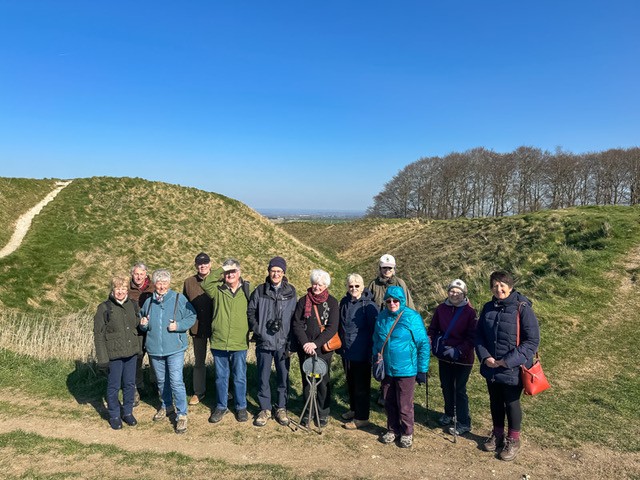
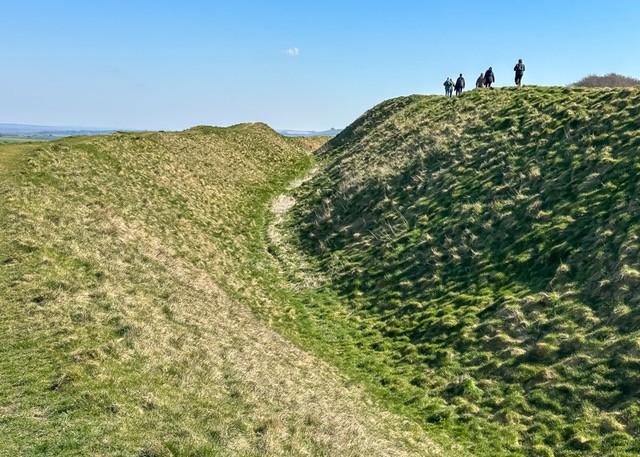
The Iron Age hill fort was built in the 7th century BC and is situated on the Ridgeway, an ancient prehistoric pathway. It is one of a series of hill forts on or near the Ridgeway, including Liddington Castle, Uffington and Martinsell. The fort is still in a good state with ramparts some 3 metres high even now. The ramparts enclose some 5 hectares of land. Geophysical surveys show that there were about 40 round structures here ,plus hundreds of holes, probably grain pits.
During WWII, the US Airforce had anti-aircraft guns stationed here to protect nearby airfields, while the Home Guard used it as a training area. The views from the ramparts are stunning and the site is well worth a visit.
Visit to St John the Baptist Church, Cirencester
St John the Baptist church stands in the heart of Cirencester, whose history goes back thousands of years. It is much larger than the average parish church and it owes this to the power of the established church, market revenues and commerce, particularly the wool trade. Cirencester also benefited by its site and rhouteways links, including connecting up the Fosse Way and Ermine Street, major Roman roads. The church was built alongside Cirencester Abbey in1117, being completed around 1140. The Dissolution of the Monasteries under Henry VIII meant that the Abbey was pulled down in1539. During the English Civil War, the town being for the Parliamentarians, the Royalists attacked and 300 townsfolk were killed and 800 prisoners locked into the church without food or water. The women of the town smashed the windows and threw food through them for their menfolk.
There are many interesting features in the church including the Boleyn Cup, which had been given by Henry VIII to Ann Boleyn. It is on display in a very secure case.


Visit to Elmley Castle
The village of Elmley Castle is so named because an early 11th century Norman castle was built here on the flanks of Bredon Hill. The original was a wooden one, later replaced by a stone castle of strategic importance. Those who owned/controlled it were among the most powerful and important in the region, including the Earl of Warwick. The church here, St Mary’s, has many interesting features. The herring-bone stonework on the chancel indicates that it may have been Anglo-Saxon in origin There is a square stone sundial in the grounds, believed to have been built in the Tudor era. The base of the font is 13th century and features writhing dragons, while the basin was later added c. 1500. There is an extremely elaborate marble memorial to the First Earl of Coventry and one to the Savage Family, featuring three prone adults, the mother with a tiny infant in her arms, and four kneeling children at their foot. The local pub is the Queen Elizabeth Inn, so-called because this monarch visited the manor house here in 1575. Local legend has it that the villagers presented Good Queen Bess with a hat. Incidentally, we had a lovely lunch here after the visit.

Our January 2025 trip was to Corinium Museum in Cirencester.
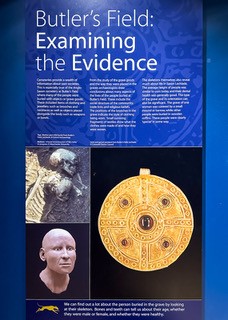
We received a lecture on the Butler’s Field Anglo-Saxon cemetery at Lechlade, It is believed that the cemetery was in use from c. 500-700 AD and was the richest one in the Thames Valley area. While only a portion of the whole graveyard was excavated (prior to housing development), 219 burials in 199 graves and 29 cremations were covered. The graveyard included both pagan and Christian burials, the former north-to-south oriented and the latter east-to-west.
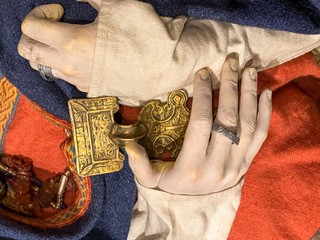
Items found in the graves included jewellery, with amber from the Baltic region and garnets from Sri Lanka. There were also cowrie shells from the Red Sea. Weapons included seax, the single-bladed short swords used by warriors, spears and shields.
We finished by going to the Anglo-Saxon Gallery in the museum to see items and details of the Butler’s Field site.
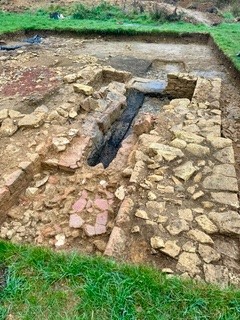
Our trip was to the current dig site of a series of Roman buildings . This is on private land and is not open to the public. It is close to the more famous Roman villa at Chedworth. We were guided round by Roger Box, a volunteer at Chedworth and the discoverer of the site. He lived close by and noticed bits of mosaic in a molehill. This is a professional dig and we were shown round by the two resident archaeologists. They explained that the site was extremely complex and difficult to unravel as there had been numerous changes over a considerable number of years. It was a privelege to be able to listen to them and shower them with questions.
Dr Edward Caswell, a leading expert on the Bronze Age, gave a presentation on “Breaking News from the Bronze Age: Oxfordshire’s Wild West”. In this part of the world, the Bronze Age lasted from 2,400 BC to *00 BC. We learnt of the coming of new ideas and technology, such as metal work and how it radically changed society, with the DNA of the Neolithic population being rapidly replaced by the newcomers. We learnt of new cutting edge research and theories on the Bronze Age, which changed our understanding of life and society at this time.
Three ancient routeways cross at Stow: the Jurassic Way, the Salt Way and the Fosse Way. There was a Bronze Age defensive structure on what is now the centre of the town and on top of that a 7th century Iron Age hill fort was constructed. The group went to the site of a fountain, where a horse pool was dug out in the 16th century to water the many horses used for transport at that time. This was the site of a heinous murder in 1834 when an actuary of the Stow Provident Bank was killed for his gold watch. The thief and murderer, a butcher’s assistant, was caught, tried and found guilty. He was hanged the following year
The group learnt about the problems of having water supplies for a town situated on top of a hill and the unique method of sewage disposal involving “swillies”, cracks in the limestone rock.
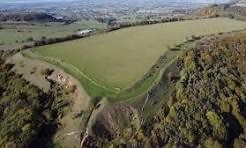
The iron Age hill fort at Uley Bury is one of the largest of a series to be found along the Cotswold scarp overlooking the Severn valley. There is evidence of occupation from approximately 300 BC to 100 AD. It was built on a promontory with steep slopes on three sides. The naturally steep slopes were further enhanced in its construction.
There are signs that there was a settlement within the hill fort and evidence of a field system. Excavations in the 1970s uncovered a crouched burial, iron currency bars, quern stones, a broach and large amounts of pottery. Finds made at other times include a gold coin of the local Dobunni tribe and a silver Roman coin.
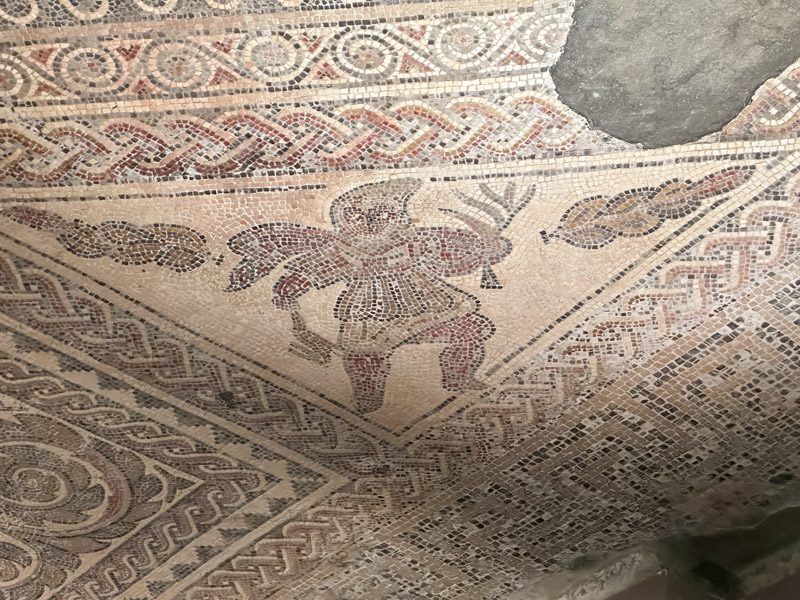
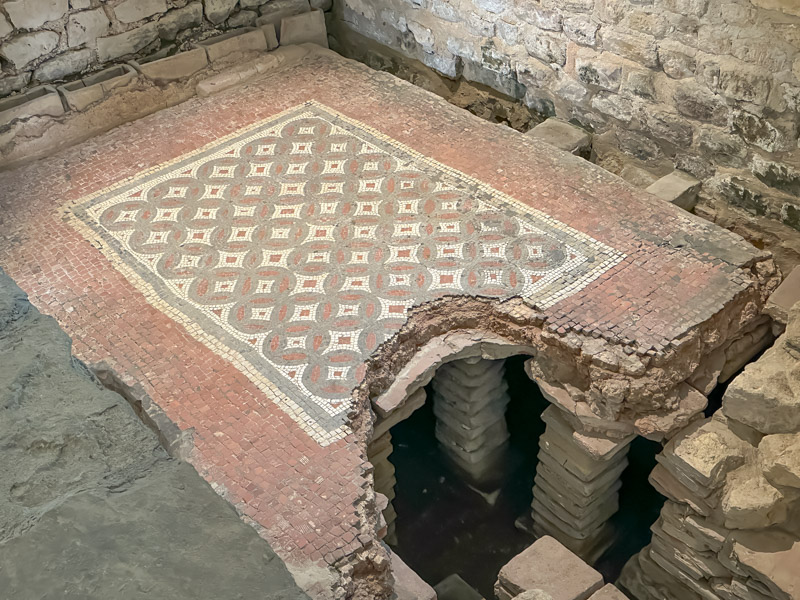
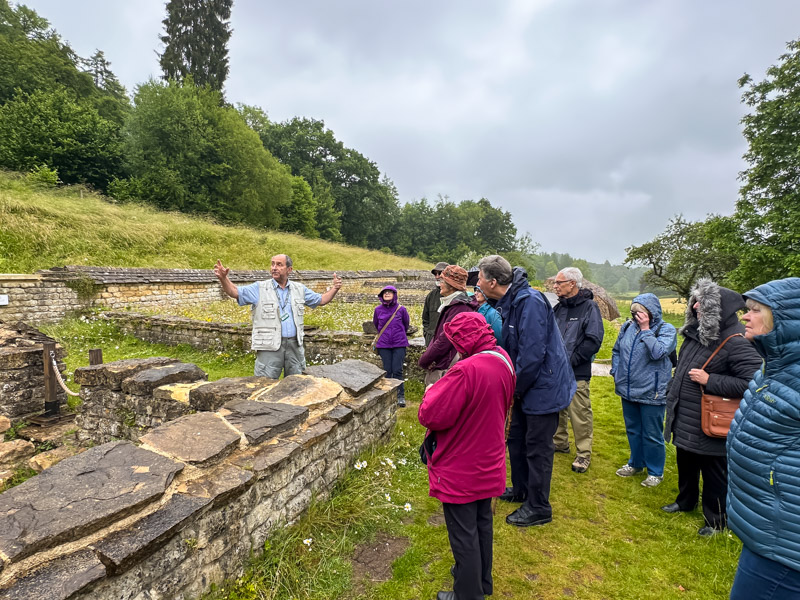
The July 2024 trip was to nearby Chedworth Roman Villa. Our guide was Roger Box, a volunteer at Chedworth Roman Villa and an experienced archaeologist who has appeared on TV programmes such as Time Team and has worked with Mrs Helen O’Neil, who had helped excavate Salmonsbury Camp in Bourton-on-the-Water. Roger gave an overview of the Roman occupation of Britain and how it affected life in Britain. He then showed us round the Villa, emphasising the changes that were made over its life. Recent evidence, gained from the mosaic floors, indicated the Villa’s working life lasted well after the Roman legions left in 410 AD. We even got the chance to see some enormous Roman snails. These were introduced by the Romans as a food source and their descendants can still be seen slithering around the area today.
St Mary’s Church on the banks of the Severn is one of the most important Saxon churches in England, dating back to about 700 AD. Some time in the 7th century a Saxon monastery was founded here and St Mary’s is associated with it. This lay in the small kingdom of the Hwicce, which was later subsumes into Mercia. It was here that King Edmund Ironside met with Cnut, the Danish king in 1016 to decide how England was to be divided between them.
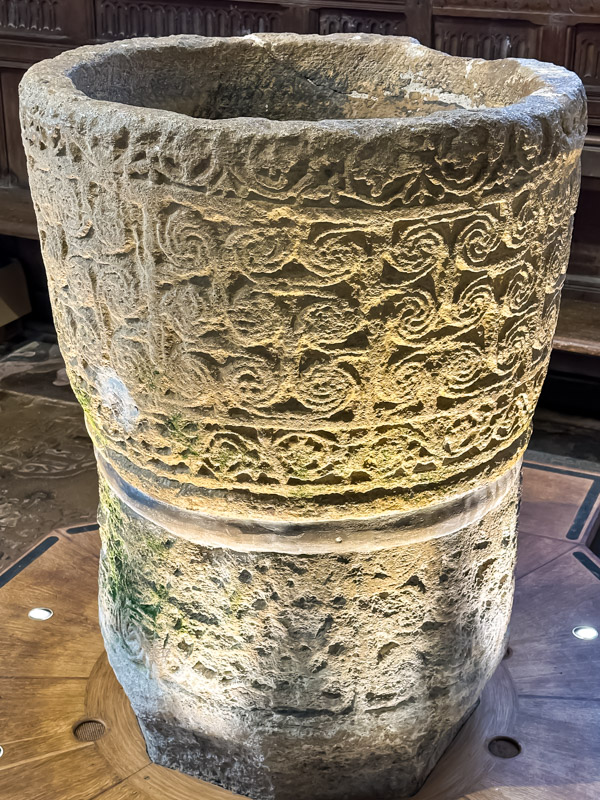
The church has many interesting features, including some rare Saxon sculpture, such as the Deerhurst Angel found on the outside wall of the ruined apse and a carving of the Virgin with Child above the inner doorway. The 9th century carved stone font is possibly the best Saxon-era one in the country.
Earl Odda was one of the most powerful of Edward the Confessor’s nobles. He had the eponymous chapel build in 1056 in memory of his brother. For centuries the existence of the chapel was unknown until in 1856 it was rediscovered by Rev. George Butterworth, following up references he had seen in the Chronicles of Tewksbury Abbey.
This trip was to Great Tew, a small village between Chipping Norton and Banbury.
Great Tew is in a conservation area so consists of beautiful cottages, made of the local ironstone, many with thatched roofs. There are several prehistoric sites in the area, including a Bronze Age barrow and a Roman villa. There is evidence of early Anglo-Saxon settlement with possibly a church there in this period. There was probably a Norman church prior to the present one, St Michael and All Angels, constructed in stages from 1170 onwards. The Clerestory was built in the 15th century and because of it the church interior is light and airy. There are the remnants of medieval wall paintings depicting the Passion of Christ. They were uncovered in 1988 and it was likely they were painted over at the time of the iconoclasm.
Great Tew Park was probably created in the 16th century. It was passed through the family to Lucius Cary, 2nd Viscount of Falkland. The 5th Viscount Falkland was First Lord of the Admiralty from 1693-1694 and the Falkland Islands were named in his honour. The pub in the village is also called the Falkland Arms.


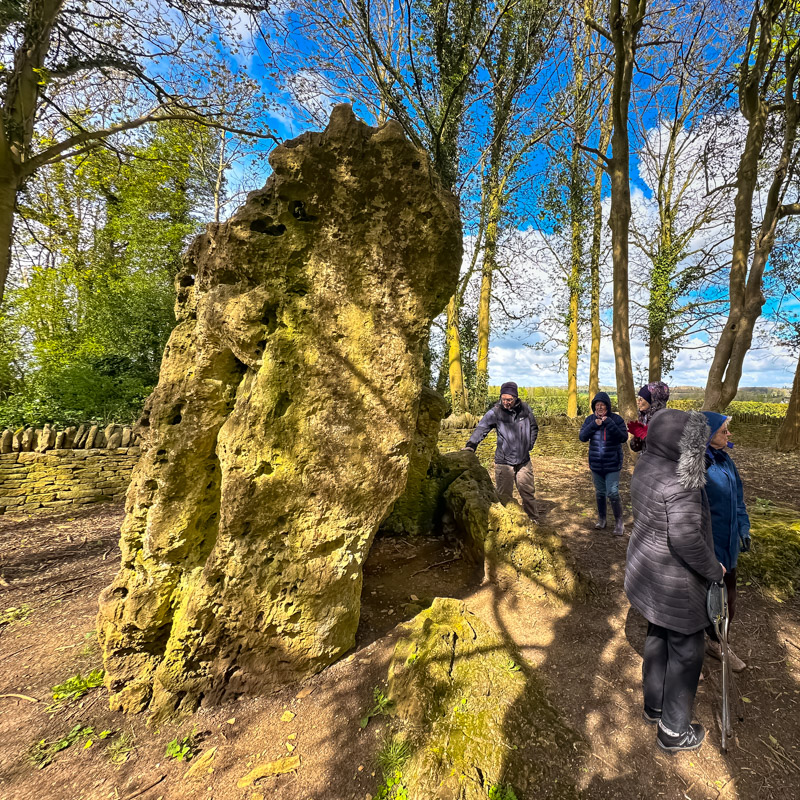
Our trip in April 2024 proved that Postal Codes and SatNavs don’t work so well in the country. Half our members went on a magical mystery tour before we all ended up at the Hoar Stone in Enstone. “Hoar” means “old”, which is apt for the Hoar Stone, a Neolithic Portal Dolmen Chambered Tomb. It is believed to be some 5,500 years old and is comparable to the Whispering Knights at the nearby Rollrights. Only about 20 portal dolmens are to be found in Britain.
We then drove to the Hawkstone near Dean. This is a Neolithic standing stone or menhir (a Breton word), and it may have been part of a larger group of stones. It is located in a field with magnificent views. It is believed “Hawk” derives from “hoar” as per the Hoar Stone above. Hawkstone is the name of Jeremy Clarkson’s brewery situated in Bourton-on-the-Water.
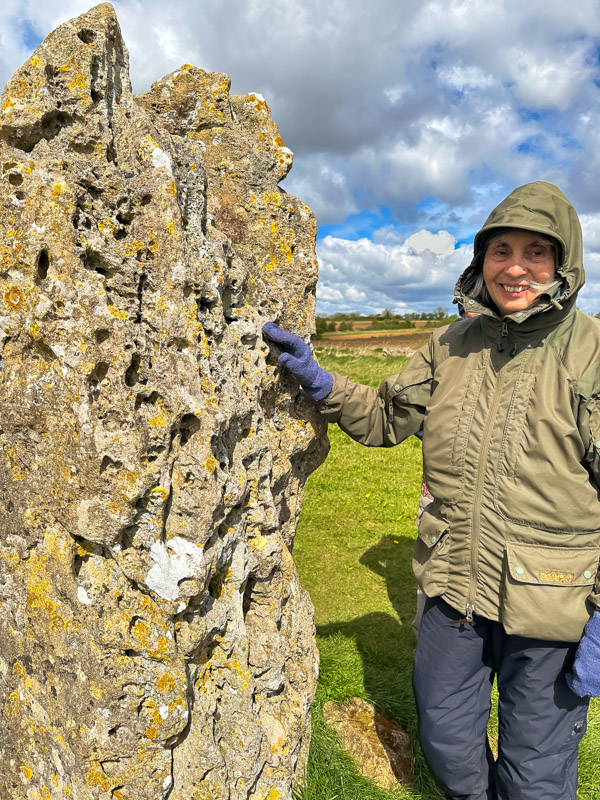
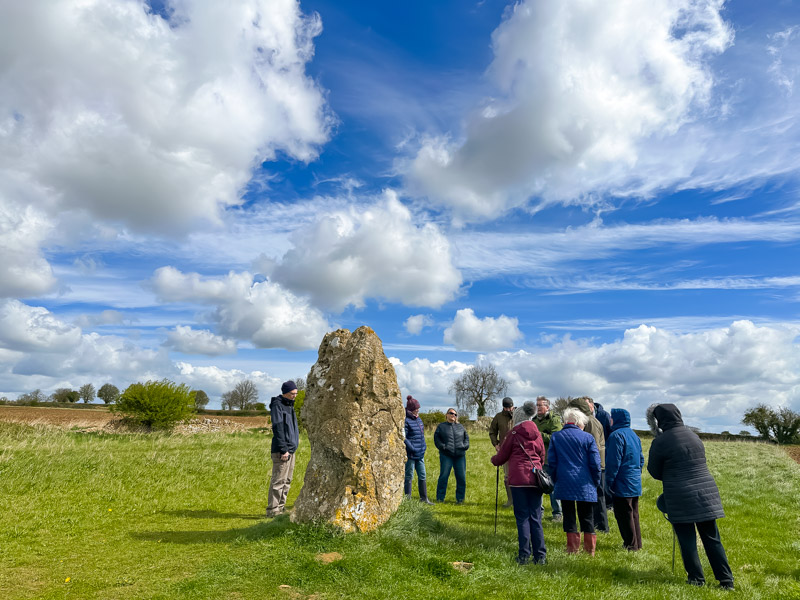
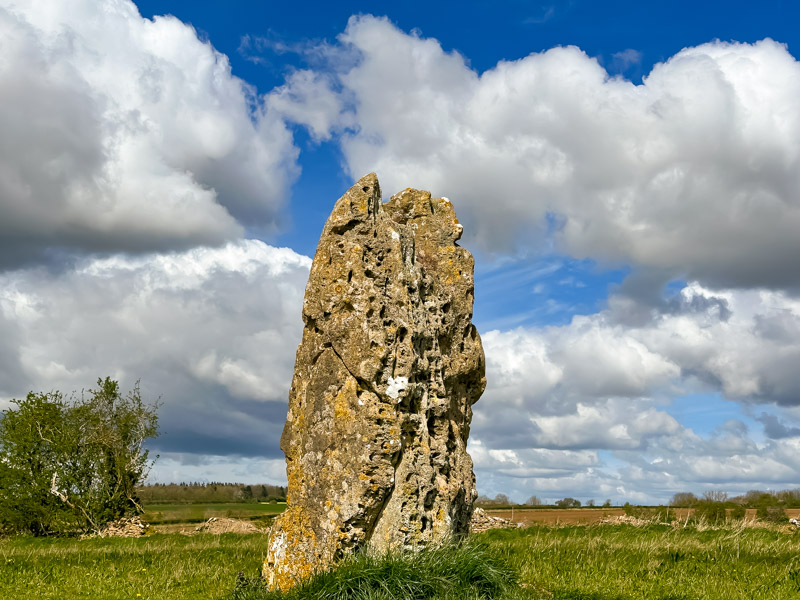
The Windmill Tump long barrow, near Rodmarton, was built c. 3,700 BC, in the early Neolithic or New Stone Age era. It was excavated in the mid-Victorian period and again in 1939 by Mrs Elsie Clifford. It has a false portal and a small forecourt, which may have been used for rituals. There is a north and south chamber on the sides. These are approached via stone steps and small passageways. Human remains were uncovered in both chambers, some with trauma wounds. In 1987, a beech tree blew down revealing a third chamber in the north-west sector of the mound. There are possibly more chambers waiting to be discovered.
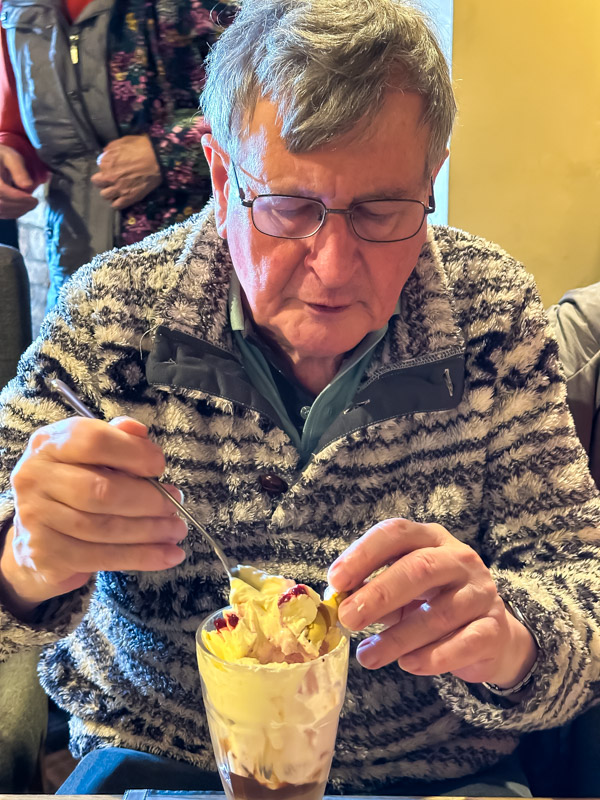
It is always interesting to be in situ, rather than just reading about a place. Why was it built in that exact spot? What was its purpose? It is always fascinating to stand on a mound built over five and a half thousand years ago and speculate on these questions. Some sherds of pottery were picked up by a member close to the long barrow. Finds are scrutinised, even when they are ice cream sundaes! (See photo)


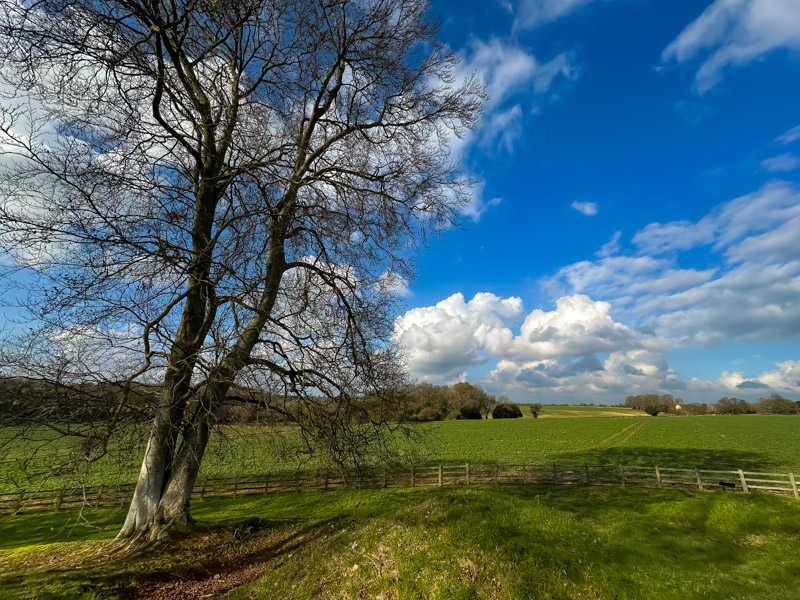
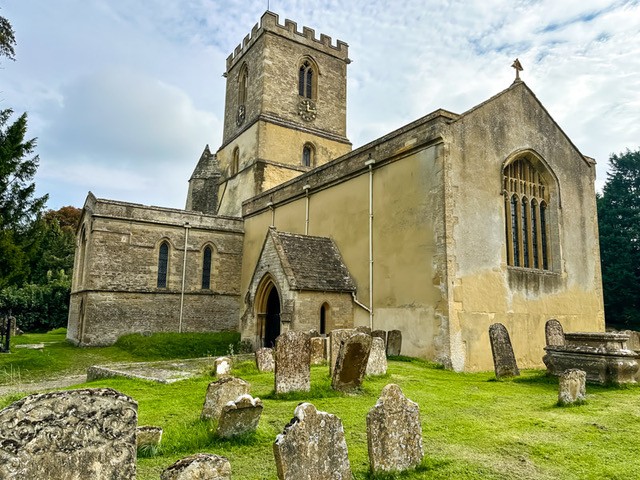
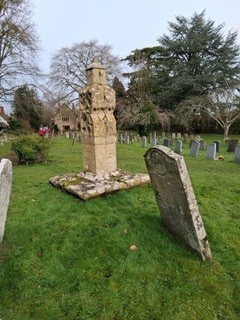
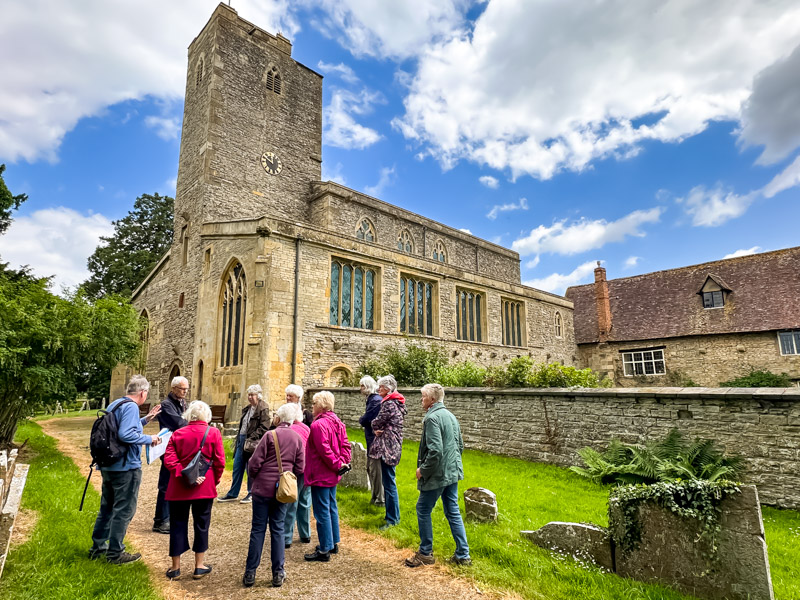
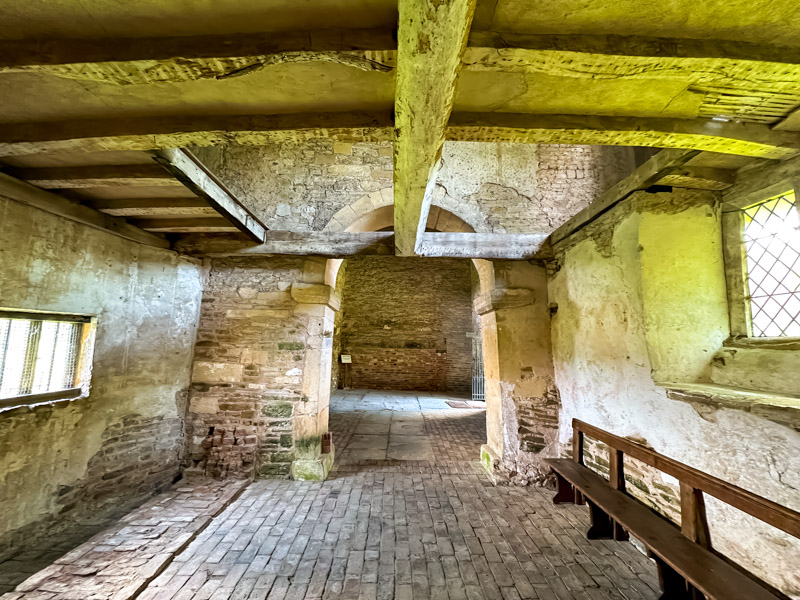
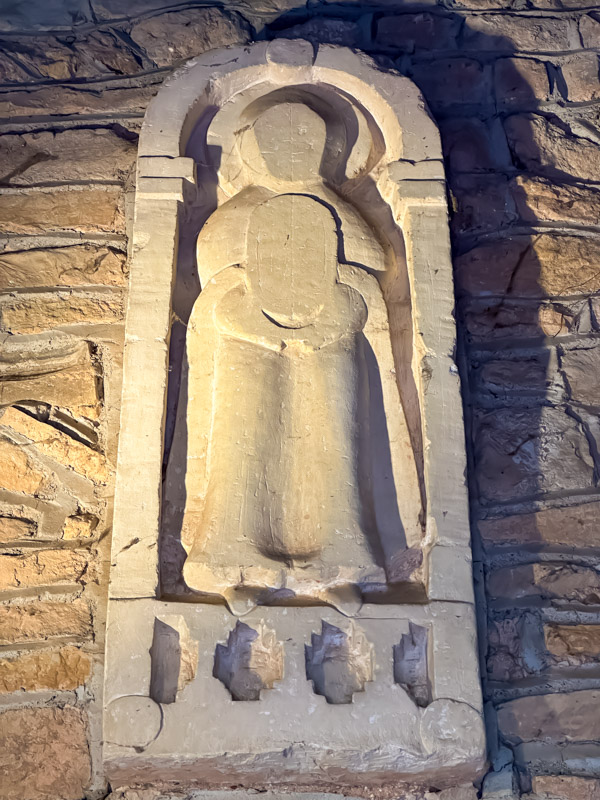
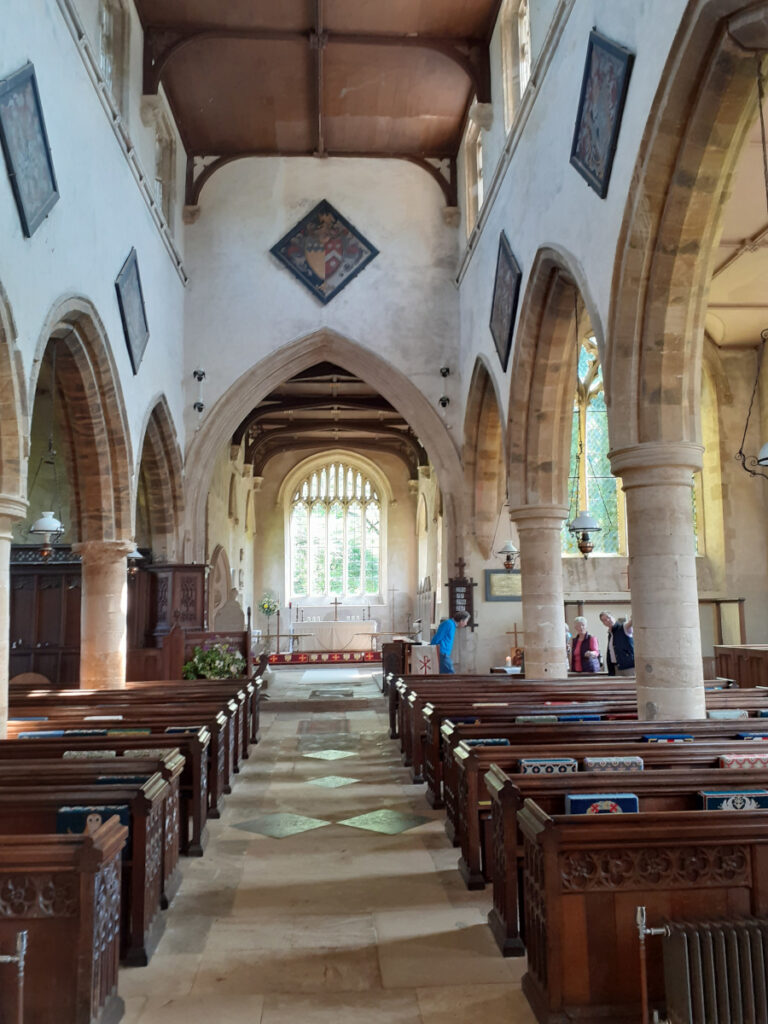
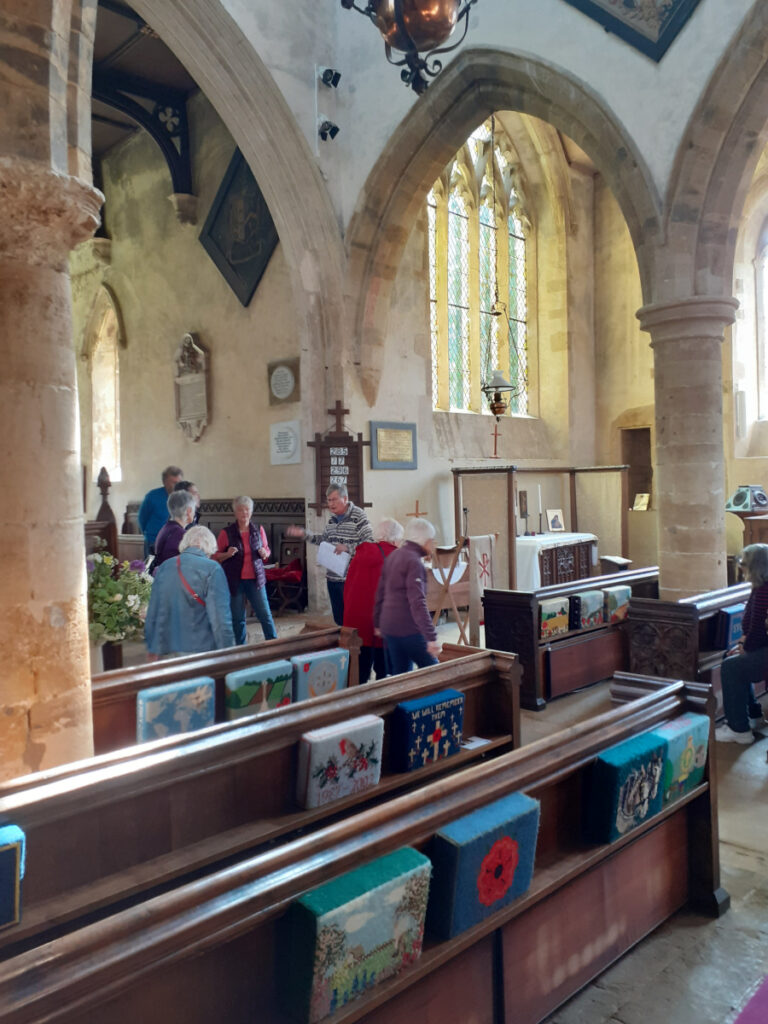
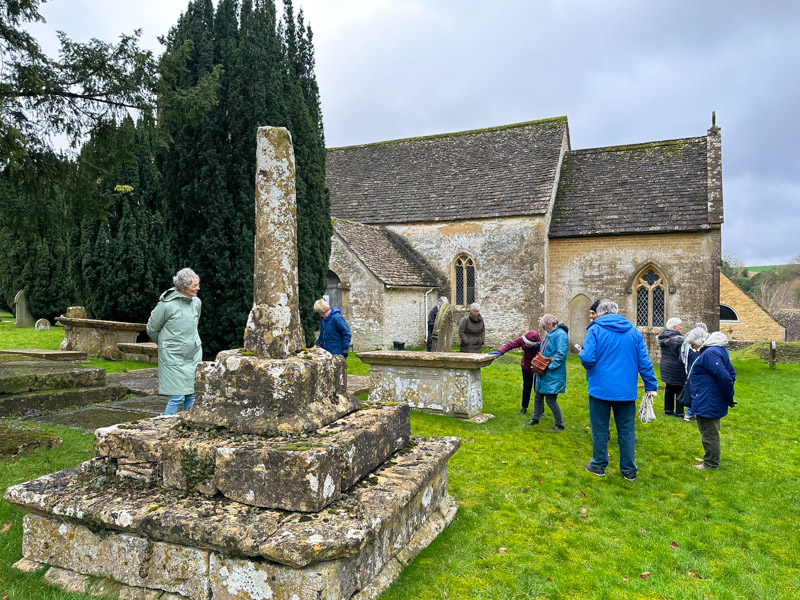
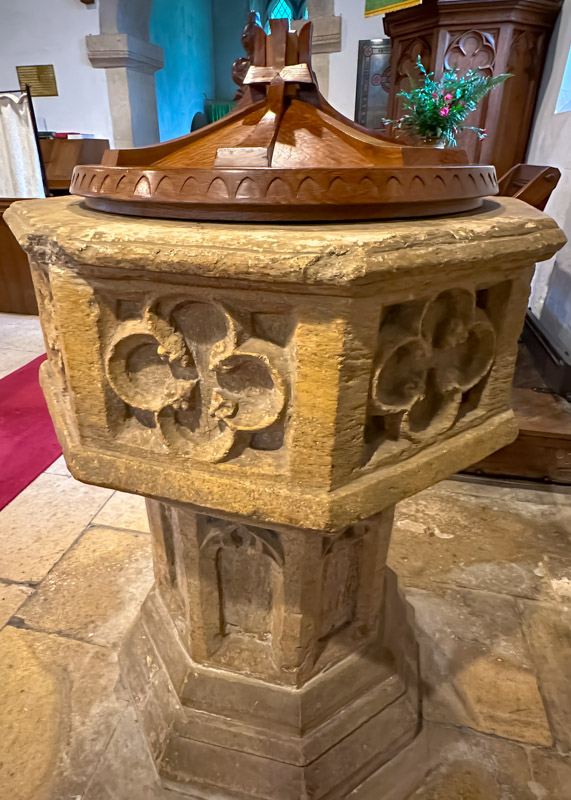
The Church of the Holy Rood (cross), is one of four in the Duntisbourne Valley, all of which have Saxon origins. Traces of its Saxon beginnings can be seen in the stonework on the south wall. A Saxon arch leads from the porch to the nave, with a sun dial above the inner door. The porch was added in the 15th century along with the tower paid for by the riches of the wool trade. The interior has many interesting features, including a 15th century stone font The carved face of a Green Man is hidden in carved stone foliage under the overhang.
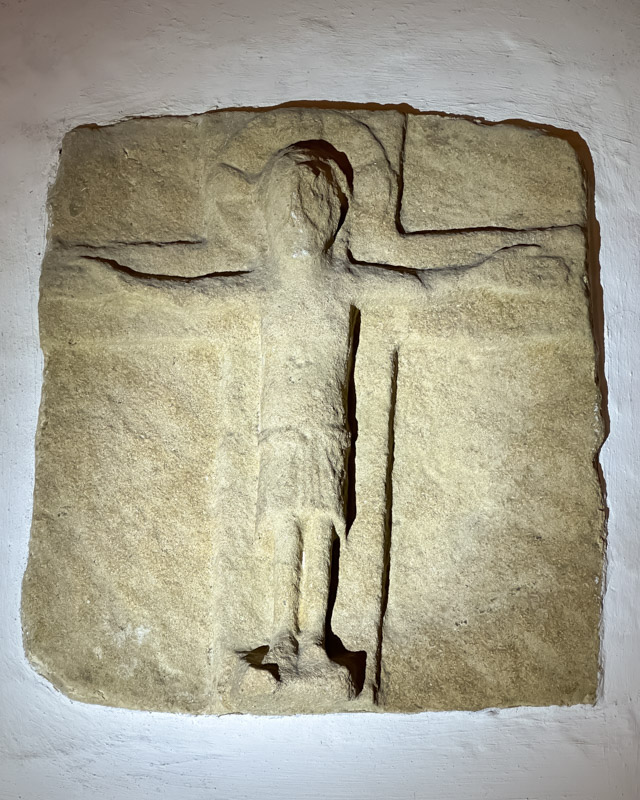
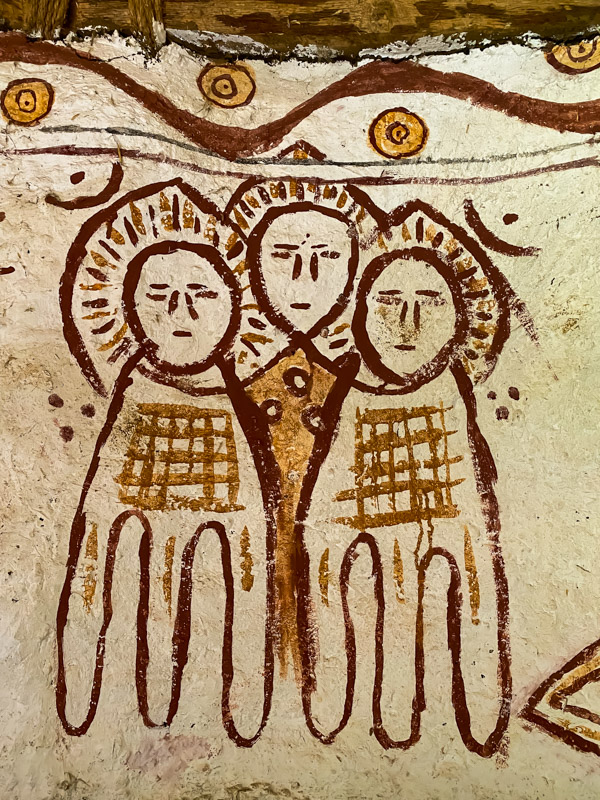
The greatest treasures of the church, however, are the four 10th century Saxon sculptures, three of which were discovered when the chancel arch was rebuilt in 1850. The fourth one, a crucifixion scene, was rescued from the East gable end and is now above the pulpit.
Though off the beaten track, this little church is well worth a visit
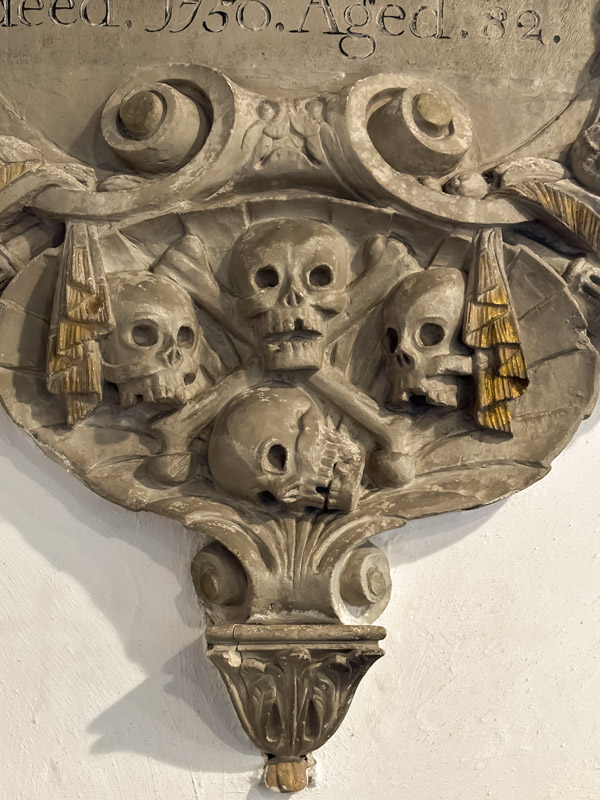
This was our annual trip to Corinium Museum’s Resource Centre, North Leach.
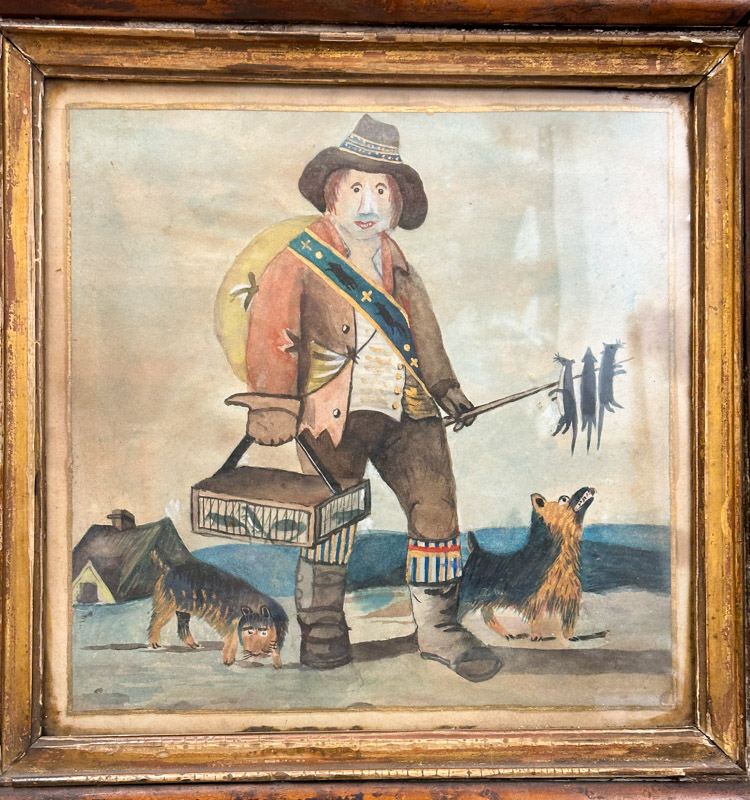
The group was split in two for presentations on archaeology and social history given respectively by Phil Brant-Simmons and Caroline Morris. On the archaeology side, we saw Romano-British pottery from Lansdowne, Bourton, Samian ware from Gaul, coin-minting moulds from Bagendon, a mammoth’s vertebrae and a Romano-British skull from Bathgate cemetery, which had undergone trepanning. The person had lived some ten years after this crude operation. On the social history side, we saw a prisoner’s iron plate from the Old Prison, a wooden twitch for making horses docile, a picture of a rat catcher and some patten overshoes.


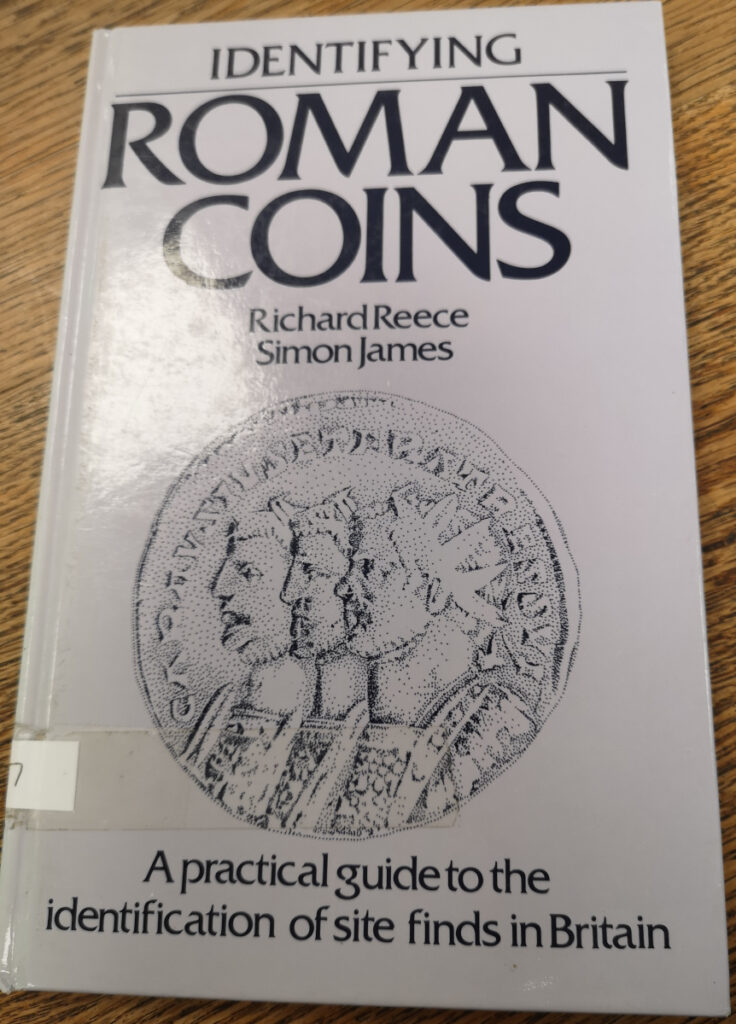
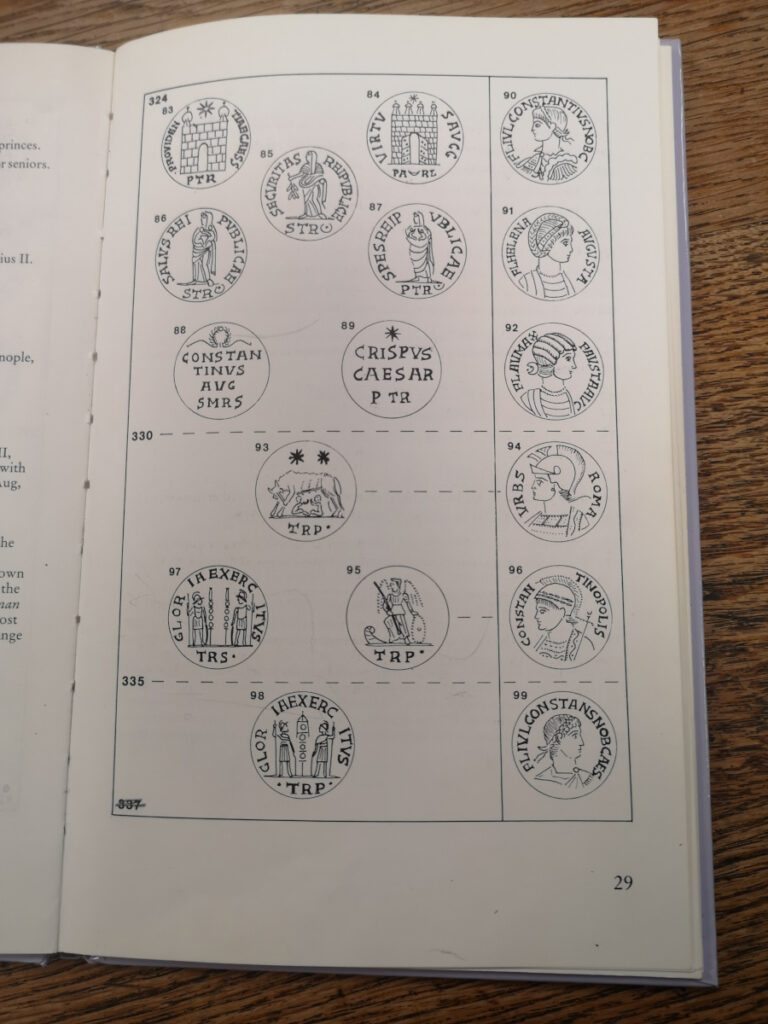
We visited the Oxfordshire Museum Resource Centre, Standlake, Oxfordshire to learn about Roman coins in Britain, concentrating on the Oxfordshire region. In recent years several hoards of coins have been discovered, including three in the Stoke Lyne region of north Oxfordshire. The first of theses yielded 1,641 coins.
We were also able to handle actual Roman coins and we were tasked with working out the designs and rough dates for them. It’s always a thrill to have hands on experience of finds.
This trip was to the hidden gem that is the Coln Valley, tucked away just off the Fosse Way.
The church at Coln Rogers dates back to Saxon times and exhibits its original ground plan. The village is named after Roger of Gloster, knight, who in 1150 gave Coln on the Hills to the monks of Gloucester for the good of his soul, after being wounded at Walyeson (Falaise).. There are also Norman and Early English features. There is a plaque in the porch celebrating the fact that Coln Rogers is a “thankful village” in that all the men who went off to WWI came back safely, one of only 49 such communities in the whole of Britain.
The earliest recorded date for Coln St Dennis is 804 AD but recent archaeological excavation and research carried out nationally make it possible that this area has been cultivated in the last millennium BC or even earlier.The Manor is first recorded in 804 AD. Edward the Confessor gave it to Westminster and partly to the Abbey of St Denis, Paris, hence the name of the village. The church has an unusual central tower and is still a place of worship 850 years after its construction.
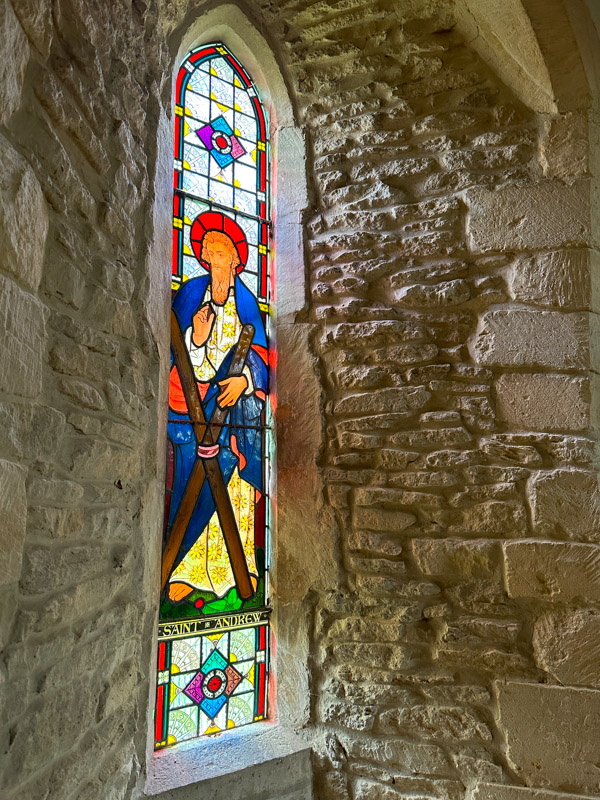
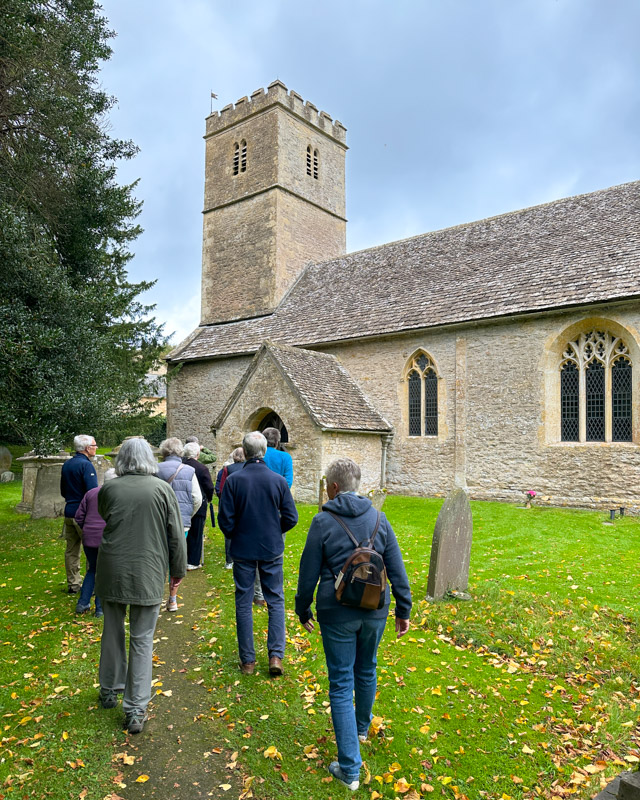
| Coln Valley (01) | Coln Valley (05) |
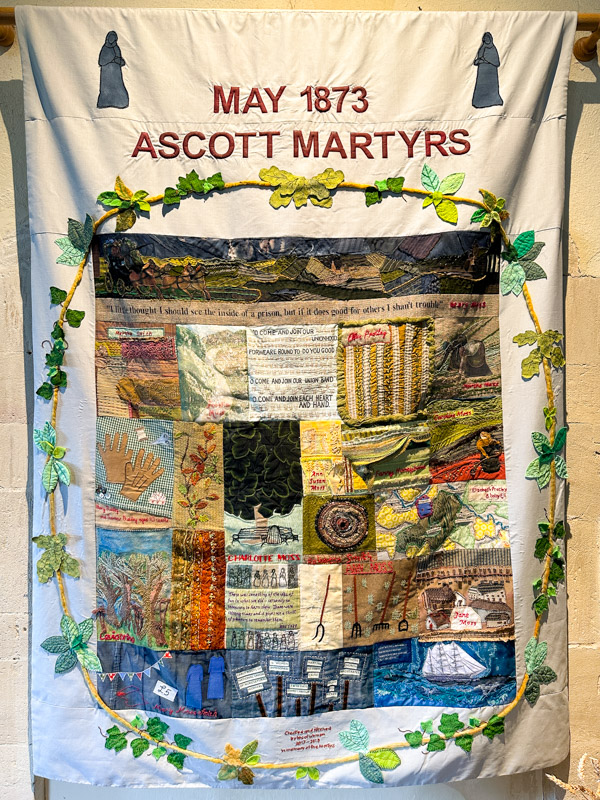
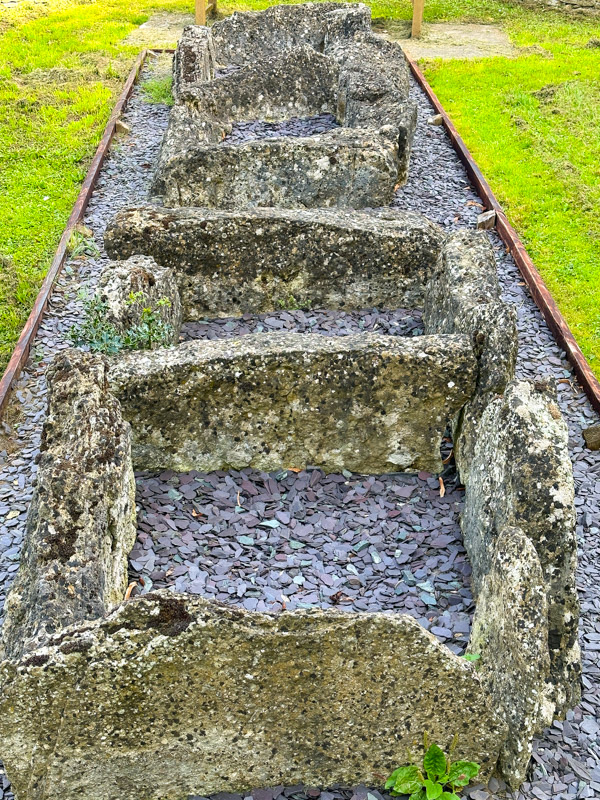
We went to Ascot-under-Wychwood and were guided round the village by Carol Anderson, Chair Ascot Martyrs Memorial Trust, who gave us a comprehensive account of Ascot and its surroundings from the pre-historic, the Mesolithic and Neolithic Eras, to the 20th century. We saw the stone chambers of a Neolithic long barrow, which had been excavated and the stones eventually moved to the old village pound.
In 1873, 16 women were put in prison for attempting to help their men, poor agricultural labourers who were striking to get a decent wage. The women, two with babies, , were jailed in Oxford prison. This attracted the attention and sympathy of the national press and these women became known as the Ascot Martyrs.
This was not our normal monthly trip but was most interesting, indicating that all our Cotswold communities, whether big or small have a story to tell.
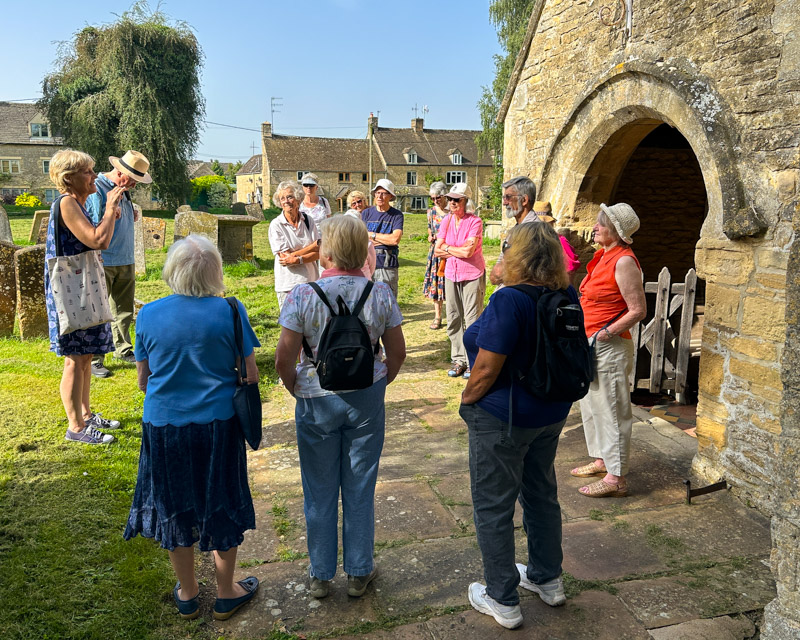
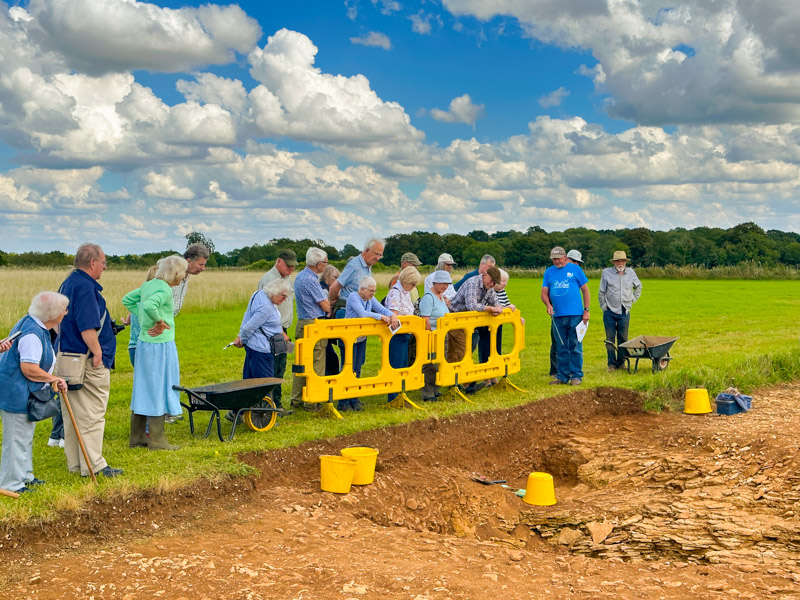
The trip in August 2023 was to the Sisters Neolithic Long Barrow, just off the Fosse Way, close to Cirencester. Professor Tim Darville and his team from Bournemouth University have been doing an annual dig at this site since 2015. Professor Darville conducted us and others round the site, giving an update on progress made so far. The first stages of the construction of the long barrow were done between 3800 and 3400 BC.. Extra building continued for centuries and the site was still in use during the Bronze Age and early Iron Age. We learnt that the early farmers of the Neolithic (New Stone Age) had links with Europe and that the long barrow mirrored what had been constructed in northern Europe.
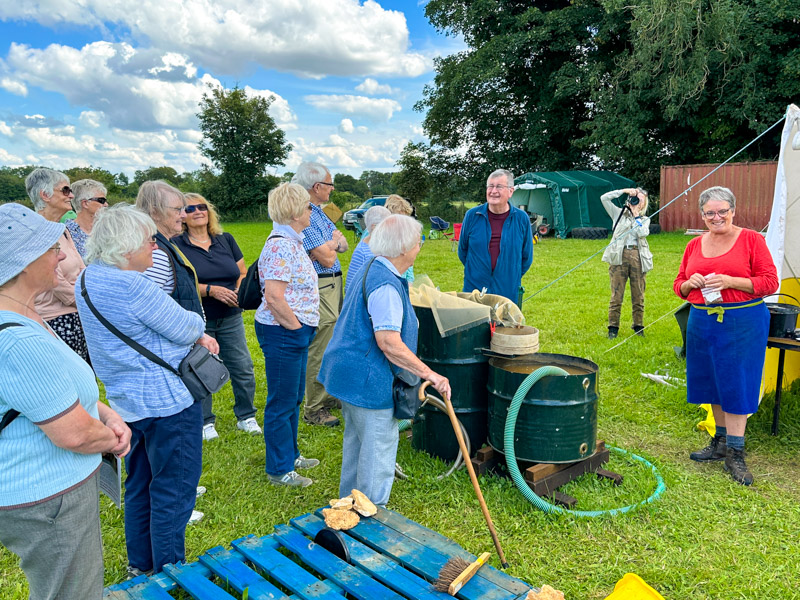
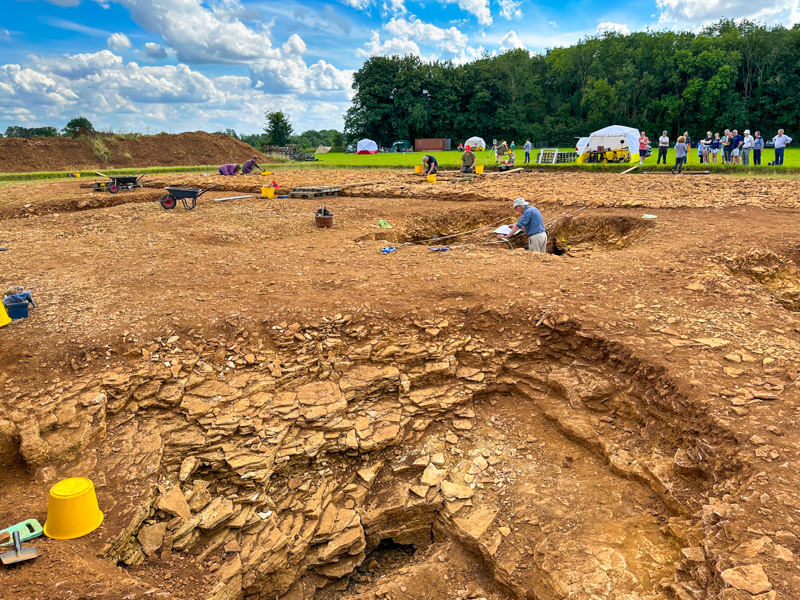
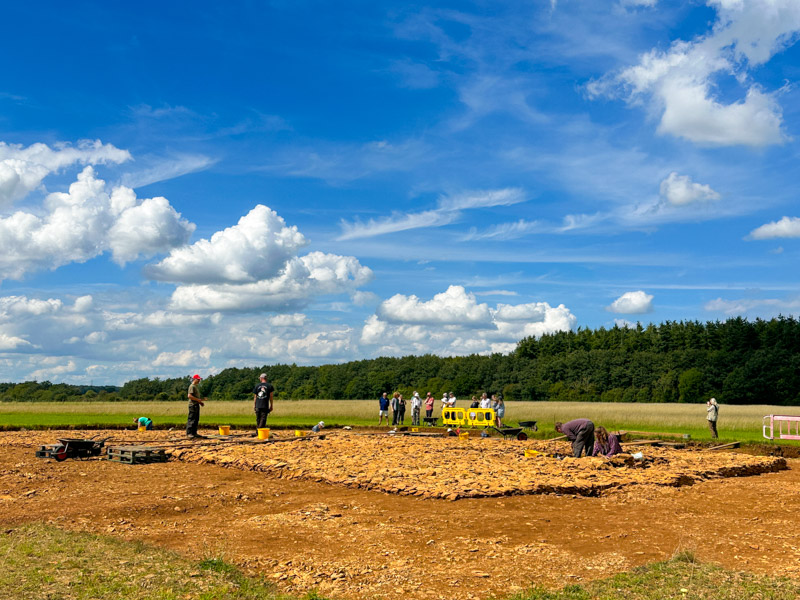
July’s trip was to Great Witcombe Roman Villa, which is hard to find but worth the effort. It is tucked away in a fold below the Cotswold scarp and close to Cooper’s Hill. It is thought to have been built in the 1st century AD and was probably occupied until the 5th century AD. It was built on a slope and so was constructed on four terraces. It consisted of the main living quarters and a “leisure wing” with a bath house and possible temple. These were joined by a corridor. We were also lucky to see numerous wild orchids surrounding the villa.
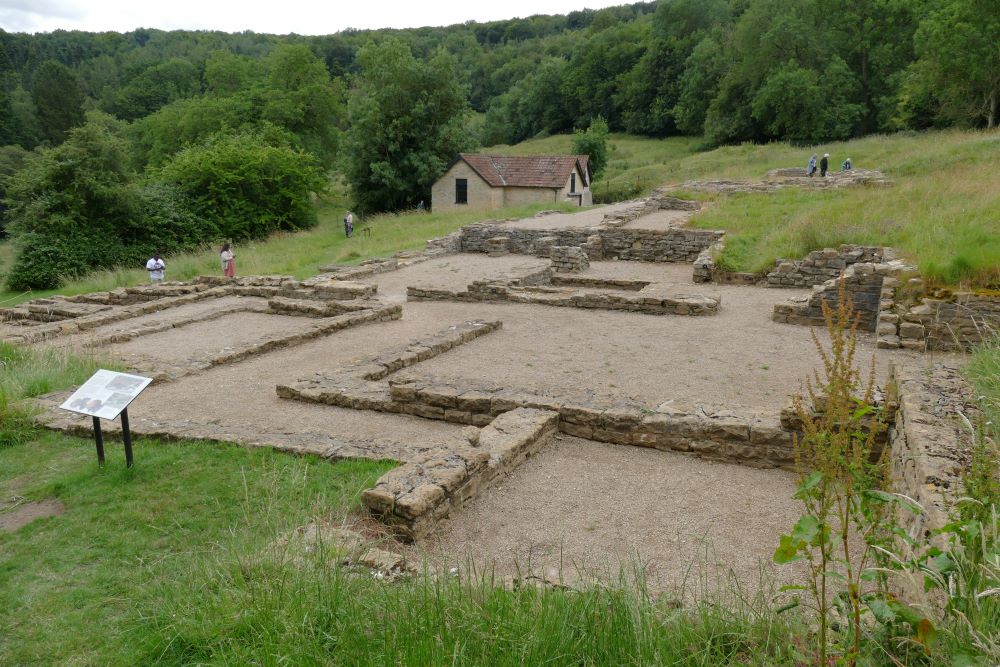
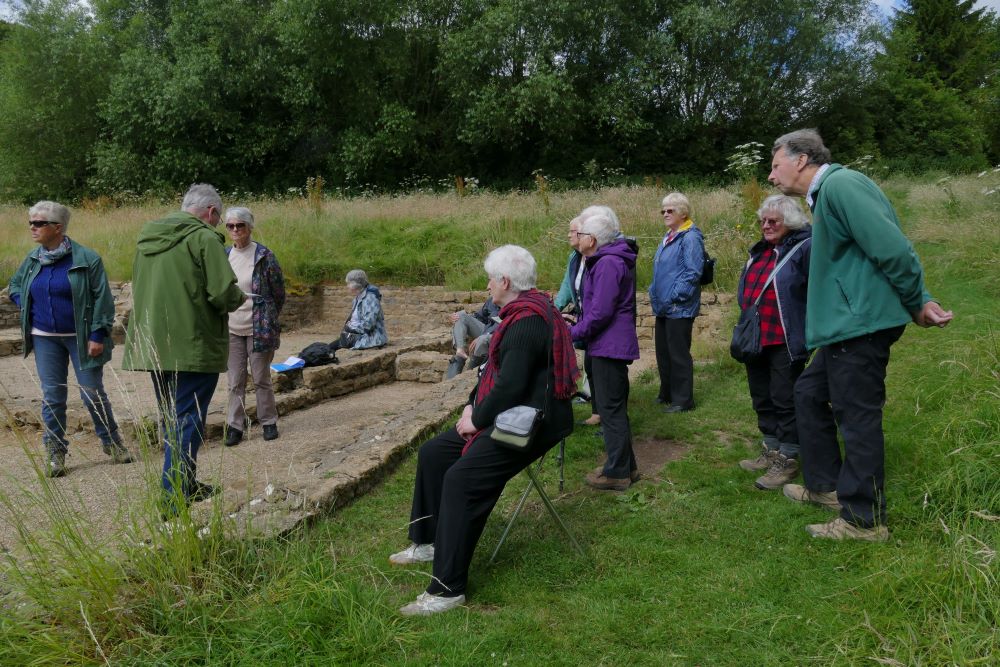
Our June 2023 trip was to Painswick Beacon, also known as Kimsbury Castle. The site has a late Iron Age hill fort, possibly constructed about 100 BC. This is situated on the edge of the Cotswold scarp and enjoys impressive views over the surrounding countryside, particularly of the Severn valley. It covers 7 acres and has three ramparts and ditches as part of its fortifications
The site is marred by extensive quarrying, while it must be the only Iron Age hill fort with a golf course in its centre!
As an added bonus, there were plenty of wild flowers, including some orchids, dotted around the site.



Our May 2023 trip was to Bourton’s best kept secret: Greystones Farm. This is owned by Gloucestershire Wildlife Trust. It has three strands to it: the wildlife, the organic farm and the history and archaeology of the site. It is a scheduled Ancient Monument of national importance, The group went round part of the once impressive ramparts of a massive structure, called an “oppidum”, built around the !st Century BC. The earliest sign of use relates to a stone hand tool, dating from the Palaeolithic Era (Old Stone Age), making it at least 12,000 years old. Geophysical surveys have revealed the presence of a Causewayed Enclosure, constructed in the Early Neolithic Era (New Stone Age).
The group then visited the replica Iron Age roundhouse, constructed by volunteers in 2017, which, among other things, is used for Primary school visits to learn about life in the Iron Age (c. 900 BC to 43 AD).

| Greystones Roundhouse (01) | Greystones Roundhouse (02) |
Our April trip was to Hailes Abbey tucked into a valley near Winchcombe. It’s managed by English Heritage and we were fortunate to get an enthusiastic volunteer to take us round. We learnt how medieval monks lived and what their daily routine was. The abbey was founded in 1246 and was built in just five years. Rob, our guide, pointed out mistakes by those early builders (so no change there!). The abbey became a magnet for pilgrims and consequently became very rich and prosperous. During the Dissolution, the abbey was suppresses during the reign of Henry VIII, systematically looted and dismantled Although not much is left, the ruins paint a vivid picture of monastic life in one of the most important religious centres in England.
There is a small, well-appointed museum with some of the relics found, including magnificent floor tiles.
We had lunch at the nearby Hayles Fruit Farm cafe, which rounded off an enjoyable day out.

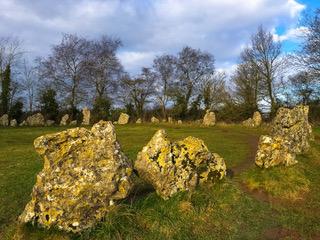
We visited the Rollright Stones, which is on our doorstep and so somewhat taken for granted. However, this sacred landscape covers two millennia and was in use for over a thousand years. The Whispering Knights form the earliest part of the site and consist of a megalithic dolmen, built some 5,500 years ago in the Early Neolithic era. The King’s Men stone circle was constructed in the Late Neolithic/Early Bronze Age (2,200-2,400 BC). The King’s Stone is a solitary stone pillar, which could have been erected in the Bronze Age.
The Whispering Knights’ dolmen was possibly a burial site. Interestingly, the King’s Men have connections to similar structures in Cumbria and is virtually the same size and orientation as Swinside stone circle in the Lake District. The King’s Stone may act as a burial marker.
There are many legends attached to the Rollrights, including a witch turning people to stone. Some stories involve young women dancing naked round the stone cile! Votive offerings are still being left at the site pointing to the power such places still exert
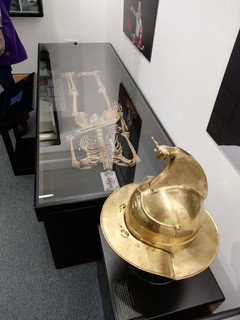
This trip to Corinium Museum, Cirencester was specifically to see the Gadiators: A Cemetery of Secrets exhibition. This relates to 80 Roman era burials uncovered near York. The remains of some of these were on display. A 20-minute film showed the latest research methods used to determine who they were, where they came from and how they died. Were they criminals, soldiers, slaves or gladiators?
One skeleton on display exhibited bite marks to his torso that are believed to have been inflicted by a big cat, such as a lion or tiger. This would certainly point to that person having to defend himself against a ferocious beast in the arena.
Time was also spent going round the rest of the museum, which I believe is well worth anyone visiting.
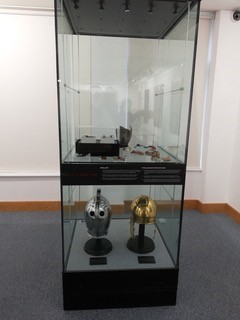
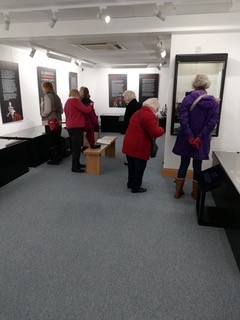

This trip was to the Corinium Museum Resource Centre at Northleach. Like other museums, the majority of its items are not on display but stored away. The Resource Centre has archaeological finds from the Cotswold area, including some from Bourton-on-the-Water and its surroundings. We were shown human remains of a woman of the Anglo-Saxon period that had been found in a river in Fairford by two lads. In addition, there were some curious social history objects and we were asked to guess what they were used for. These included a wooden distaff and a nib anvil for producing quill pens. Conservation work is also undertaken there and we were able to see two volunteers cleaning and preparing an old plough.
The Northleach centre is a fascinating cornucopia of delights, which we have been visiting on an annual basis.